• Published on

    The language of "Skincare": for Women, and Writers, (and women writers)

    Recently, while watching TV, I was asked point blank by the star of a popular night time drama if I have been waking up with “fatigued” skin. I am accustomed to these odd, almost metaphysical questions, which are often posed in tones of serious concern by a woman who appears to be too young to vote or drink alcohol in most States in the Union.
     
    But this time, I was truly perplexed. In my many decades on earth, my skin has been dry, cracked, scratched, torn, cut, burned and occasionally decorated with warts, pimples, moles, and bug bites. To my knowledge, it has never been fatigued.
     
    The moment gave rise to a feeling of nausea, anger, and, oddly enough, fatigue! After years of being marketed to in this alarmist, condescending, idiotic way, I’d had enough. This was the straw.
    (If someone would please provide me with a camel’s back, or a less-overused metaphor, I’d appreciate it.)
     
    I’ll put aside for the moment, the meta-issue here, which is the implication that the perfection of our skin is (or should be) a priority for women. Instead, let’s get right to the grammar of it.
     
    I don’t want “less dark spots” on my skin. If anything, I want fewer dark spots on my skin. (And I’m not even so sure about that.)
     
    Next, I do not think it is possible to “hydrate dryness.” If you hydrated dryness, wouldn’t it be…wetness?
     
    Moving on: Being your best beautiful.
     
    Where do I begin? “Best” is an adjective and should not be used to modify or describe another adjective. And “beautiful” is an adjective. To use it as a noun implies that it is an object, a discreet thing, or perhaps that it is an intention you can realize. Even its relative, “beauty,” is not to be possessed or achieved in the way these ads suggest.
     
    Next, I do not believe in Big Foot, the Loch Ness Monster, or the Easter Bunny.
    Nor do I believe in “A New Day for Skin.”
     
    Moving on, “Volumizing” is not a word.
     
    Getting down to the real issue: the term “skincare” is a misnomer. Caring for your skin is not about putting stuff on it, aside from sunscreen. It’s about being as healthy as you can and not abusing it. If you want to try to slow some inevitable change in it, OK, good. Go ahead and try. But let’s not call it “skincare.” That’s not a real thing.
     
    There are real maladies of the skin, and people suffer terribly because of these, both physically and socially. One of the greatest risks to skin is sun exposure. Wearing sunscreen and preventing sunburn are important. Having bad acne is nothing to laugh about. And serious diseases often have concomitant skin problems. Even in the healthiest person, as the skin ages, a layer of fat diminishes and the skin becomes more fragile. I’m not talking about any of those real concerns.
     
    I’m talking about purely invented problems, like “uneven skin tone,” “loss of firmness,” and, the most humiliating of all, “lack of radiance.”
               
    The language of “skincare” offers expensive solutions for these cooked-up problems, as we are told that we need to “trap moisture,” “replenish”, “renew”, “correct” or even “repair damage.” For those who have lost all respect for the English language, there is even a brand “Revitalift.”
     
    Along these lines, we have phrases like…
     
    “Plumps skin cells.”
     
    “Hydroboost.”
     
    “Ageless skin.”
     
    The most recent piece of disturbing news these nonsense speakers are broadcasting is that my lips are aging more rapidly than the rest of my skin. This disparity, unnoticed by me before I was so informed, can be addressed by a new kind of lip stuff. Thank goodness.
     
    And that’s the point of all this. If there’s no problem, then there’s no market for a solution to that problem. No illness, no need for a cure. Though it’s done with a bit more subtlety than the man-in-the-lab-coat-ads of the 70’s, the industry devoted to selling women products to change their skin is still largely built on a medical model, albeit with a more holistic, alternative-medicine aesthetic. Ironically, these ads capitalize on the fact of our growing health-consciousness. The yoga mat is a popular accessory prop in these ads, though the advertisers fail to point out that a woman’s skin is more likely to glow from yoga than it is from their expensive goo.
     
    And for those of you out there thinking, “what’s the harm?” Why is she bothering to take the time to attack the lousy, incorrect, sloppy, misleading language that these unethical fear mongers use to get us to buy their crappy little bottles of goo?
     
    Because it is harmful. The images are harmful. The implications are harmful. The distraction from things that really can improve our lives and the lives of those around us is harmful. And these days, quite often, the goo itself is harmful.
     
    Many, many items on this loosely-regulated market are using hormones. Specifically, they contain phytoestrogens that mimic the body’s own hormones and can wreak havoc on the thyroid gland, in a world where various kinds of thyroid diseases are already on the rise due to environmental pollution. (Insert second rant about estrogens in plastics here.) As one endocrinologist told me recently, he now has to add a question when speaking with his patients: What are you putting on your skin?
     
    Also, if you read the very fine print on many of those “anti-aging” elixirs, you’ll see that in many cases you are not supposed to use them before you go out in the sun. So not only are they not helping, they’re increasing the very real risk of sun damage. Lovely.
     
    That these products are marketed to women at an age of increased risk of thyroid disease, namely menopause, and in a world where the ozone is thinning, leaving us at potentially greater risk for sun damage including cancer, it is all so unethical that I need to take a deep breath before I continue.
     
    Ah. (Unlike these products, oxygen is good for the skin:)
     
    Disclaimer: I’m not saying don’t have fun with your toilette. I’m just saying, don’t be a sucker.
     
    I remember the moment I first felt excited about these sorts of products. I was on vacation the summer I turned 13.  I walked in to a drug store. It was the same drug store I’d been to on many previous summer vacations, usually to buy candy. That summer, I came upon the aisle filed with lotions, face creams, and cleansers. I remember thinking: all of these things have been here every summer, my whole life. How is it I never noticed them before now? They seemed to me edible, delicious, inviting me to womanhood.
     
    It wasn’t that there was anything wrong with my skin. Or hair. Or body. But I felt like a wizard’s apprentice, ready to begin my experiments. Transformation was what the products offered. It seemed to me self-evidently desirable.

    Better than candy.
     
    Now, I’m saddened that I have to tell that young girl inside of me that there’s a man behind the curtain who made the whole thing up. And worse. Knowing as we do that most of these companies engage in torturing animals, it becomes even more difficult to take any part in keeping them in business.
     
    I say torturing, not “testing on” animals because  “Animal Testing” evokes an image of a bunch of cartoon horses, sitting at desks with Number 2 pencils ready to take the SATs, or maybe anima-tronic cats punching holes in multiple choice forms. Let’s put the misnomer “Animal Testing” out to pasture, along with “Skincare.”
     
    So what’s the truth of the matter?
     
    Even if you accept the premise that not all of us have skin as lovely as we’d like to have, and that we want, of all the problems in the world, to address this one. Or that caring for our skin, even pampering it is enjoyable and nurturing and good for us. Or that looking our best helps us show a positive face to the world. Even if all that is so, and I believe it is, these companies do not deliver anything close to what they promise.
     
    A few years back, I ran into an old college friend on the street in New York. Since our time as undergrads, he’d gone on to a successful career as a fashion photographer. He was just heading to his studio to work on some photos he’d taken of Miss Universe. As he put it: “Even Miss Universe needs Photoshop.”
     
    We all know it. The women in these ads, don’t really look like that!
     
    In 2011, an ad by Lancôme featuring Julia Roberts was banned in the UK, after a group called the Advertising Standards Authority ruled against the company in a complaint filed by a British MP, who accused the ad of being misleading. The heavily-retouched ad was for a product called “Teint Miracle.” An ad for a product from Maybelline called “The Eraser” featuring Christy Turlington was also banned. Lancôme and Maybelline are both part of L’Oréal, as is the formerly-progressive company, The Body Shop.
     
    If there were any truth in advertising to be had, all of these companies would have to include in their ads the suggestions that we reorder our lives so that we…

                Make sure to get enough sleep,

                Take plenty of exercise,

                Drink lots of water,

                And, importantly, do some research and trial and error to make sure that our diet does not include items to which we are sensitive or allergic.
               
    They might even suggest that we do more to be of service, or that we don’t hang around people who stress us out, or stay in jobs we hate, or spend too much time in the car, watching TV, or on the computer, or reading ads about “skincare” with completely unattainable standards of beauty.
     
    For those who were hoping for some “skincare” tips in this post, I apologize. Of course I have my own tricks. I will tell you that there is very little that cannot be accomplished, whether moisturizing, shaving, or makeup removal, with a run-of-the-mill, organic hair conditioner, which will run you about seven bucks for eighteen-ounces. And I love essential oils...
     
    See how easy it is to sidetracked? It’s not so easy to opt out of this how-you-look is how-you-are assumption that is so prevalent in our culture. It’s a moral code that equates appearance with value, and it’s got its hooks in.
     
    Personally, I wish I’d opted out of it more, and sooner. Over the years I’ve spent hundreds, or maybe even thousands of dollars on products I’ve used three times and then thrown away. Not because of a feminist principle I hold, but because they don’t work. They don’t improve my skin. And they don’t fulfill the promise behind the promise: they don’t improve my life.
     
    What might you do with 144 dollars and fifty cents?
     
    That’s what Clinique, one of the most medical-aesthetic “Skin Care” companies wants from you for 3.4 ounces of its “clinical dark spot corrector,” which you should not use before you go out in the sun, by the way. For its “Custom-repair serum”, it asks 154 dollars, but that’s because it’s a serum, which implies that it fights pathogens of some kind. Maybe it fights gullibility pathogens.
     
    Or maybe it fights racism. I’m not hearing a lot of language from Clinique about the fact that if its product removes dark spots, it likely also makes you look whiter. How long do you think these companies could get away with what they do if they were required to use plain, or even accurate language?
     
     “Our cream removes a layer of skin and bleaches the raw skin underneath, making you more prone to sun cancer while looking whiter!” Uh, could somebody get the FTC on the phone? How are they allowed to sell this s#@t!
     
    Think of what a hundred and fifty bucks would buy in fruits and vegetables. You could get a massage for that, or buy a dozen books on your favorite subject. Or a month pass for yoga classes. You could become a sustaining member at any number of wildlife refuges. You could put it in a retirement account, and by the time you’re eighty, it might pay your rent for a couple of days.
     
    Conclusion:
     
    In his book, Walden, Henry David Thorough tells us to “beware of all enterprises that require new clothes.” Taken out of context, it sounds as if he is knocking variety, or extravagance. But the essence of the paragraph is that our focus should be on the person within the suit of clothes, the part of us that “cannot be removed.” Thoreau suggests that a person should live in such a way that “if an enemy take the town, he can, like the old philosopher, walk out the gate empty-handed without anxiety.”
               
    Of the outfit itself, the shoes, the jacket, etc., Thoreau says simply that if they are fit to worship God in, “they will do.”
               
    Taking the skin as a metaphor, it is in some ways like our clothes, our layer of protection from the world, and also our first point of contact. But it is also something that reveals, and perhaps is meant to reveal, who we are. To show the world nott only our heritage, but what we have been through in life. To show our age.
     
    Thoreau also points to self-acceptance in that paragraph, and that is the question we skip when we are drowning under waves of self-improvement. Do we accept ourselves as of value, as we are? Put another way, given whatever we believe to be holy, is our face fit to worship?
               
    I dare say it is.
               
    And I’ll dare a step further, and paraphrase Thoreau:
               
                Beware of all enterprises that require you to wish for a new kind of skin.
     

  • Published on

    The End of the End: Right-to-Die Legislation Passes in CA

    Last week here in California, Governor Jerry Brown signed an important piece of legislation. The law, entitled the “End of Life Option Act,” gives physicians the right to prescribe lethal medication to patients at the end of their lives. The patients must be mentally competent, two physicians must agree, and the dosage must be self-administered, which is what makes this “Physician Assisted Suicide” as opposed to “euthanasia,” at least by legal definitions of those terms.
               
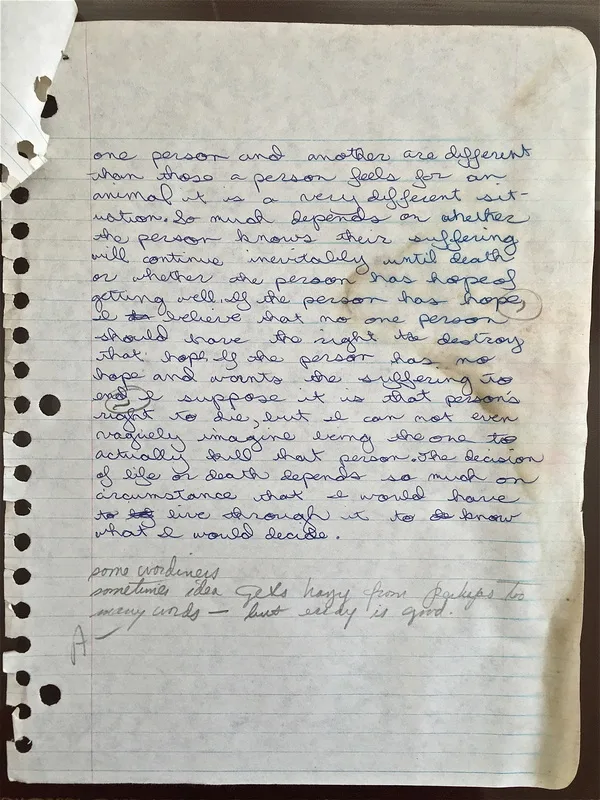
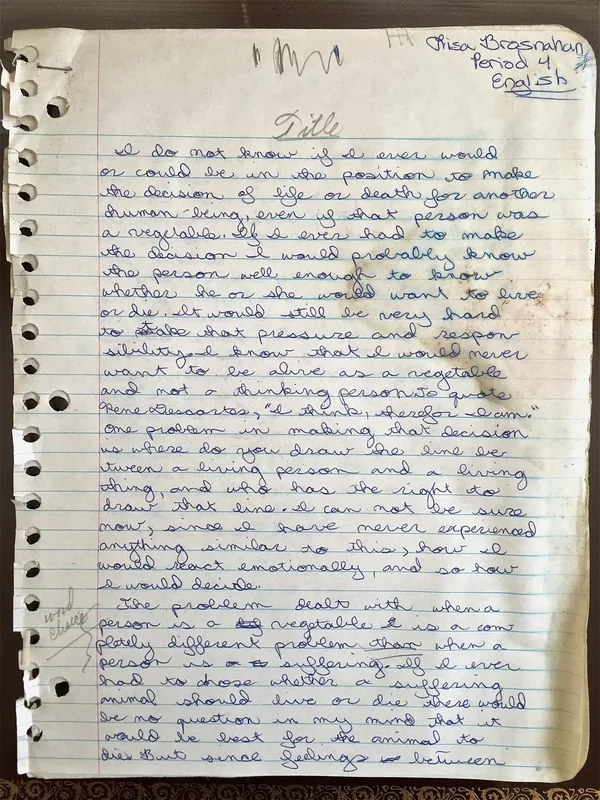
    It seems an amazing coincidence that a day or so after the legislation was passed I came upon a very old box of papers that needed sorting. In it, I found this essay. (See below.) It begins with the topic of being kept alive without brain function, but eventually gets to the heart of what many people these days call “death-with-dignity” issues.
     
    It also so happens, that just a few days before the governor signed the legislation, I took my old cat to the vet, to be euthanized.
     
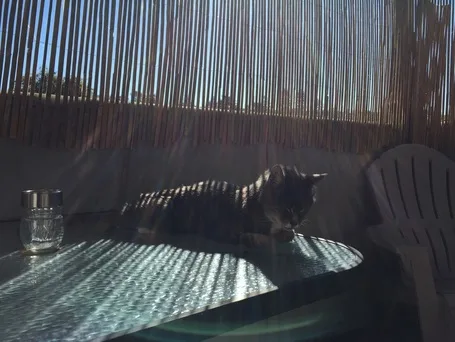
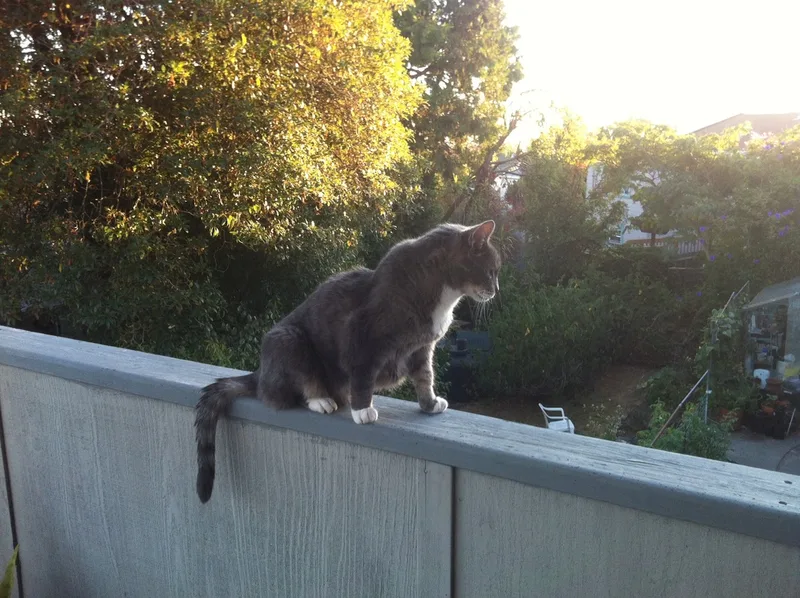
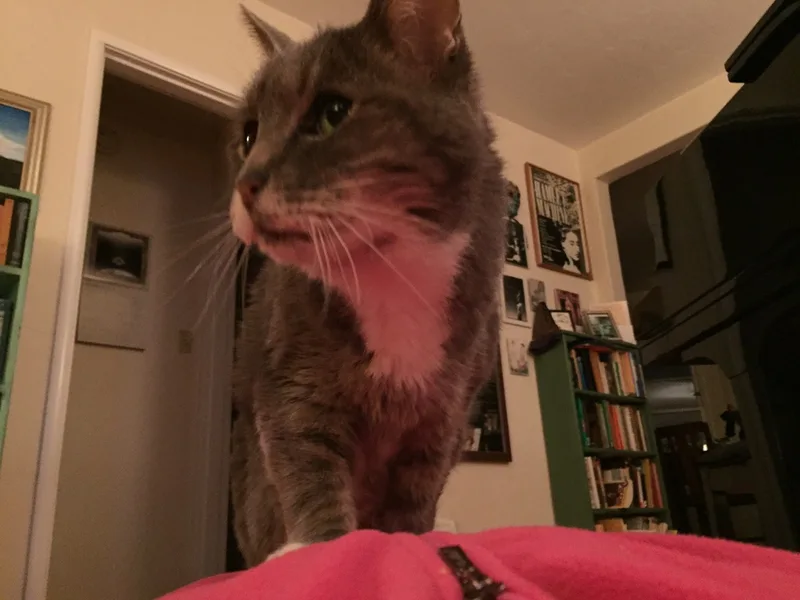
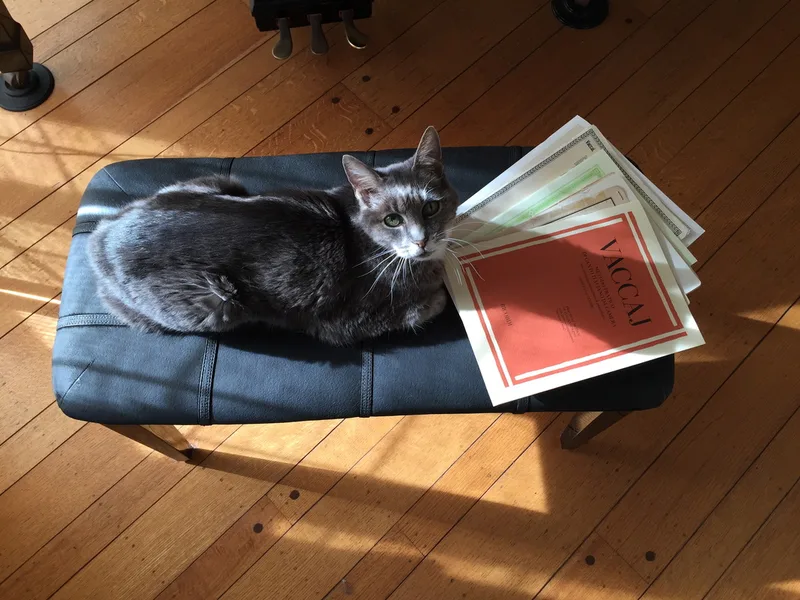
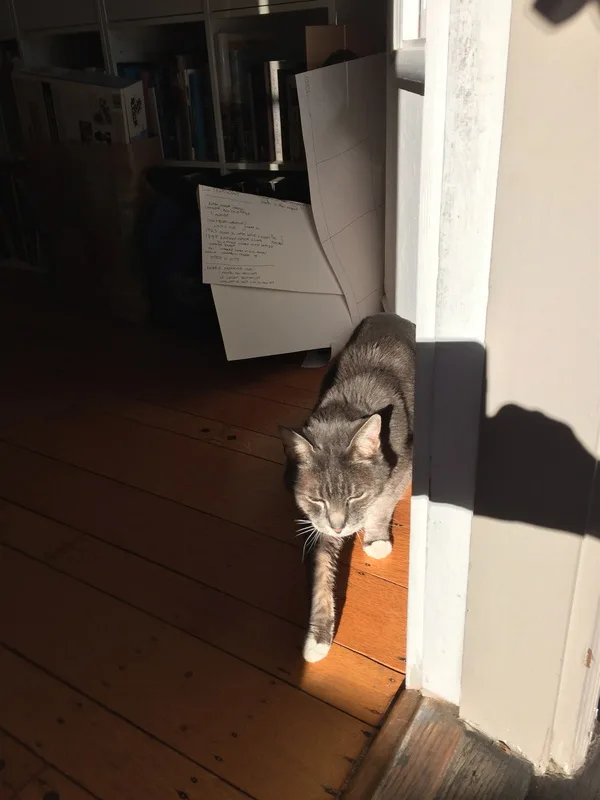
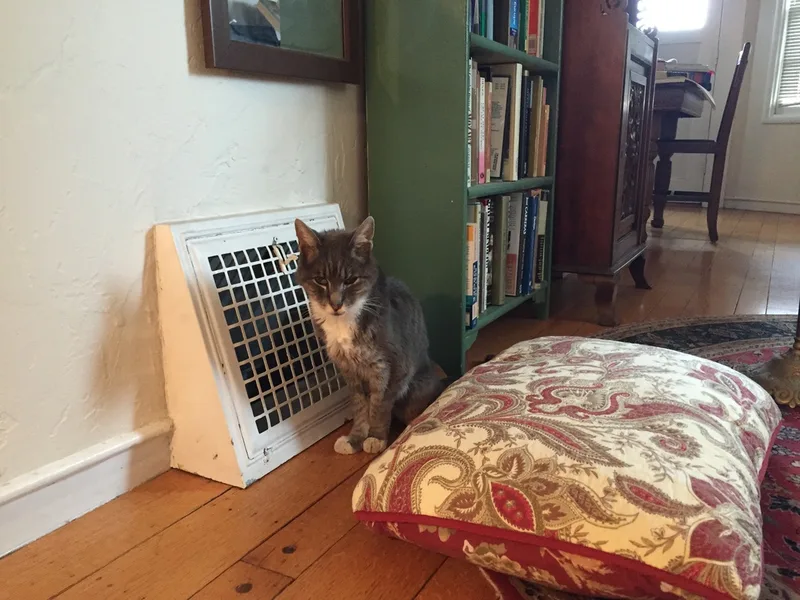
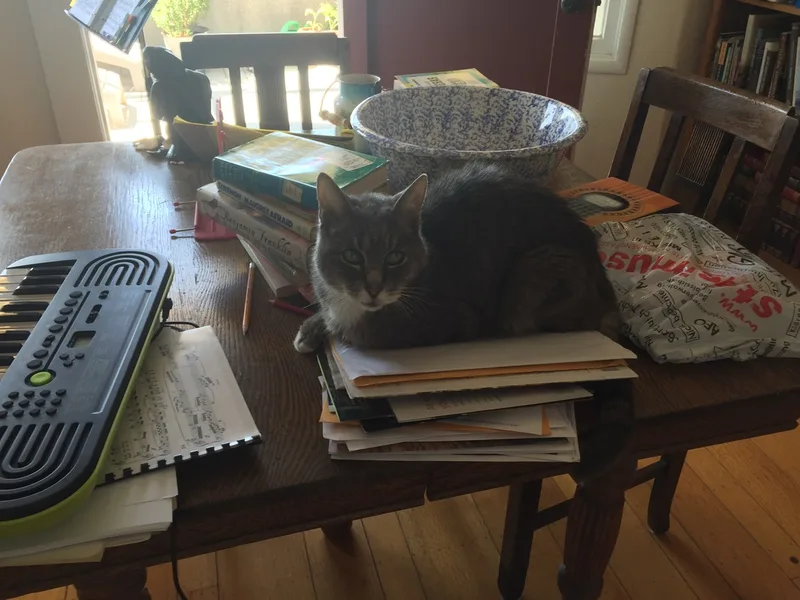
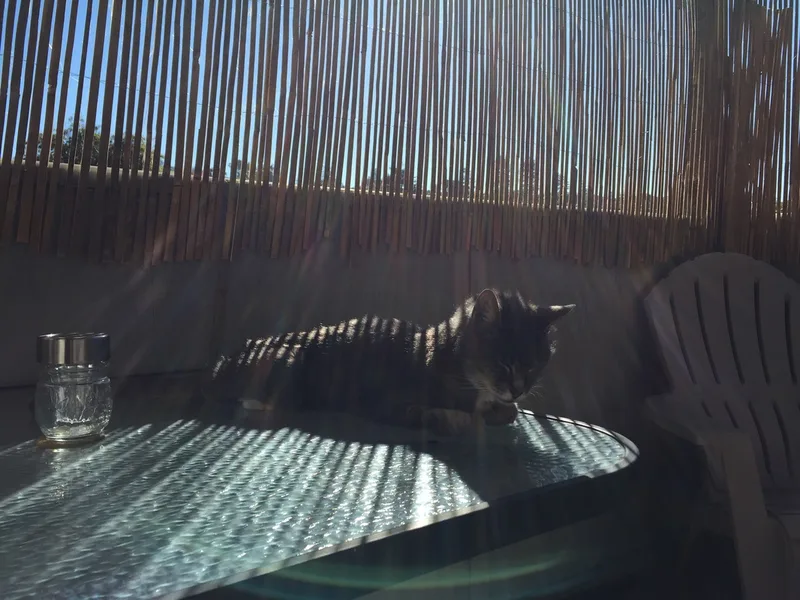
    It was an emotional, heart-wrenching few weeks, as it was with the two other animals I have had euthanized in my life. One cat I had for eighteen years. My dog Sammy, an overgrown lab mix I had from the time he was a nine-week-old puppy until he was fourteen and a half. Old Grey was somewhere around twenty-years-old when he died. On all three occasions, I was immensely grateful for their long lives, and for the care and assistance of the vets at the end of those lives.
     
    Some time before Sammy passed away, I asked his vet how she felt about the fact that people don’t have the right to make the same choice at the end of life for ourselves, as we make for our animals.  She and I had seen a lot of one another over Sammy’s lifetime, this doctor and I, because of Sammy’s severe epilepsy. I respected her enormously, and still do. I will never forget her answer, which she offered not only for her self, but for her profession.
     
    She said that she didn’t know any vet, whatever their religious beliefs might be, who did not believe that humans should have the same right to a humane death an animal has. Not one.
     
    Roots of the word “euthanasia.”
     
    There is a lot of language around this issue, and you’ll see that my essay includes some questionable word choice. One common translation of euthanasia, as “mercy killing”, is certainly incorrect. Or at least it’s not a literal translation, because mercy killing refers to the person administering the medication and their intentions. But the Greek prefix “Eu” means well, or good. Euthanasia means, simply, a good death.
     
    Old Grey’s behavior changed in the last weeks of his life. He wanted to be outside all the time. And once outside, he would wander in different directions than his previous patterns, to the point where I didn’t let him out on his own any more, afraid he would wander into the street, or just wander off.  In the house, he kept finding new and strange places to hunker down. Various closets. Behind a hole in the paneling under the sink. Every time I came home, I had to play “find the cat.” Once, I came home and found most of my china shattered across the kitchen floor. Old Grey had climbed up onto the counter, and into the back of the cupboard, moving aside the heavy buffalo china in the process. He couldn’t have made it any clearer: he was looking for a way out.
     
    Looking back at the final photos of Old Grey, I am shocked by his condition, and realize how much denial was still swimming around in me, even though I was doing my very best to face the fact that he was dying. Now that he’s been gone more than a week, when I come home, I still open the door just a crack and angle my foot there, as if to prevent a kitty escape. I forget he’s gone a dozen times a day.
     
    I think this kind of denial is one reason the legal battles around this legislation have taken as long as they have. We’re all in denial about death, most of the time. That’s the way we’re wired.
     
    From that place of denial, part of us thinks that the conversation about end of life issues is actually a conversation about whether or not we’re going to die. That part of us believes that if we support this legislation, we’re saying we’re going to die, and if we don’t support this legislation, then we’re not going to die.
     
    Do we really believe that, intellectually? No. But somehow the whole issue triggers something in us, as if it’s a big flashing sign that reads: DYING! And then evolution goes to work. We check what we think is the other box: NOT DYING!
               
    Fortunately, there are people among us brave enough to have realized that is not the choice we are confronting. Some of those people, my friend Katharine among them, paid the emotional price of watching a loved one suffer and then took the time to fight this legislative battle on all our behalves. We owe them an enormous debt, as we do to those who will continue the fight in the 45 states in the U.S. that have not fully approved such legislations.
     
    I remember writing this essay when I was thirteen or fourteen. I am including it here in the original form even though it may be a bit difficult to make out in this picture. Something about the girlish handwriting seems to me indivisible from the teenage mind that created it. It reminds me how small we all are in the face of this issue.
     
    And despite outdated word choice, and a touch of grandiosity that makes me cringe, I stand by it. 
     
    Author’s note: the teacher’s comments at the end about "wordiness" are, unfortunately, still quite fair and common critiques of my writing style:)

    Picture
    Picture
    P.S.
     
    In case the teacher’s remarks at the end are not legible, they read as follows: “some wordiness. Sometimes idea gets hazy from perhaps too many words-but essay is good.”
     
    I can’t take this adolescent essay at face value entirely. At that age, when we thought something was really funny, my friends and I used to say dramatically, “that kills me!” That’s how little we knew of death. We could make a joke of it.            
     
    But there is one thing I like about the essay. It’s the willingness to admit that I don’t really know how I would feel until I’m in that situation. Looking at it that way, it becomes self-evident that we should leave the choice to the person in that situation, or, if they are unable, to the person who knows them best.
     
    I’m not making an argument. The argument makes itself. I think those who have the experience, like hospice workers, or the vet, or my friend Katharine, they already know the sense of this. All we can do is take their wisdom to heart. Or we can absorb the lessons of death that all our loved ones, animals or otherwise, bring us so generously at the end of their lives. Or we can wait and see for ourselves.
     
    Or all of the above.
     
    But I like that part of the essay, the way it hovers over the issue, my young mind trying to decide, but then admitting that I don’t really have the answers. As an older person, it’s a habit I’ve gotten out of, saying, “I don’t know.” 
     
    I don't know...
     
    I’m making a mental note to myself to admit that more often, that I just don't know. Especially when it comes to second-guessing other people’s choices, both big and small.
  • Published on

    In Kitty Heaven (Poem & Slideshow)

    Image description
     ​In Kitty Heaven
                   
    For Old Grey
    199? -  October 1st, 2015
     
    In Kitty Heaven, butter sits unwrapped on the counter all day long, getting smellier and smellier. And when you climb up to lick it- the only natural thing to do- nobody yells at you to get down. Later, fresh  glasses of water stand on every night table, unattended.
     
    Surfaces are arranged at a gradient in Kitty Heaven so that everything is mountable. A footstool leads to a sofa leads to a bookshelf leads to the top of the fridge. There is no vantage point denied you.
     
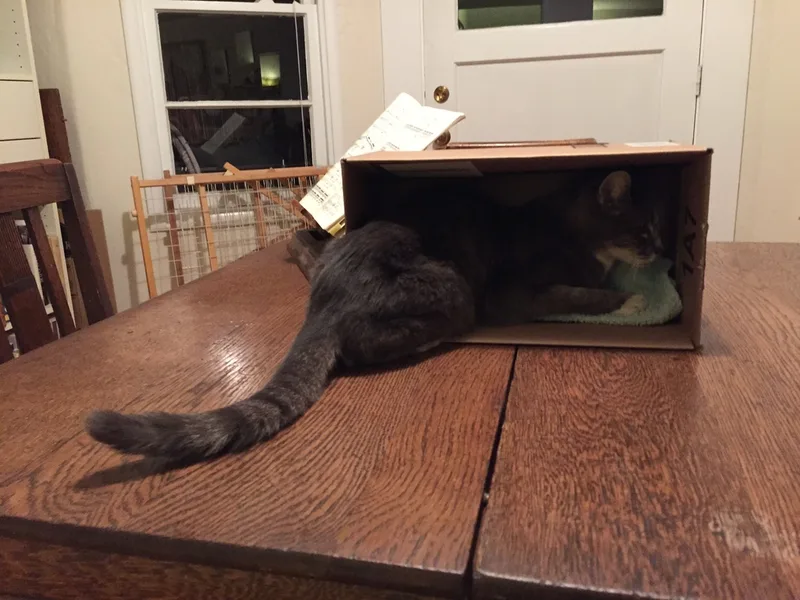
    There is always a fresh supply of cardboard boxes in Kitty Heaven, of varying sizes and strengths. Sometimes, they fit just right. Other times, they are too big, or too small, or collapse if you climb on them. This is all part of the fun.
     
    There is always a lap available in Kitty Heaven when you want one, because people who live in Kitty Heaven are not allowed to leave. There are no office jobs, day trips, vacations or weekends away. People in Kitty Heaven remain in Kitty Heaven, to serve.
     
    Clearly spelled instructions are posted in all rooms for humans, delineating preferences. Scratch under the chin, counter-clockwise, but only in the evenings. Leave the bedroom closet door open, just a crack. Mornings, move around that fake mouse on the string, at dawn. I said dawn.
     
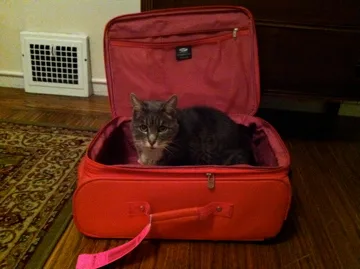
    Even though people in Kitty Heaven are not permitted to leave, there are plenty of strange bags, and suitcases in Kitty Heaven. They arrive unexpectedly, sometimes full of smelly laundry. Then, they are left open, available for exploring. The laundry taken out of them is not washed. Oh no. It is left in a pile on the floor, for siesta.
     
    All furniture in Kitty Heaven has rounded, upholstered edges. Even the stove, and those ugly chairs in the dining room.
     
    When you want to go outside, you go outside.
     
    What you do outside, where you go, who you see, is nobody’s business but your own.
     
    The menu in Kitty Heaven varies. At least once a week there is something really smelly, like tripe, or something alive, like a mouse. Occasionally the sound of dry food being poured into a bowl is piped in through a sound system, so you can ignore it.
     
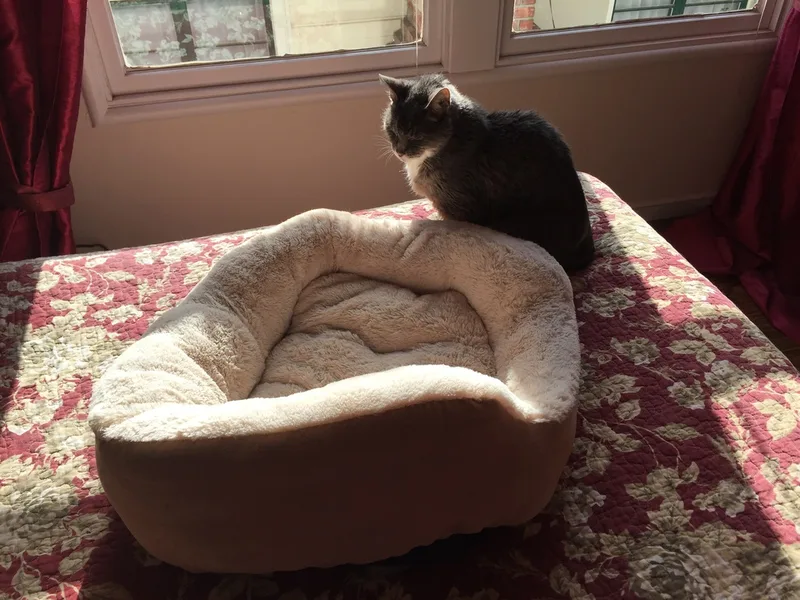
    Similarly, there are lots of soft, expensive cat beds around, but you only use them when the people aren’t looking. Then, like when you died, the people go to throw them out and notice they’re covered with cat hair. The people are astonished, and you laugh at them, from Kitty Heaven.
     
    There’s a lot of paperwork to do in Kitty Heaven, but it never gets done because you sit on top of the papers. For as long as you want.
     
    In Kitty Heaven, Bella, (the calico bombshell from next door who thinks she’s all that), is not allowed over the fence. Likewise, the scrawny orange tabby is not free to wander down the middle of the friggin’ street like he owns the place. They have their own Kitty Heaven, somewhere else.
     
    Dogs are allowed in Kitty Heaven. Surpised? Yeah, they are. Their stupidity is entertaining, plus they make the house smellier, and raise the median temperature a noticeable half a degree. These are basic quality of life issues for you. Plus sometimes, when they’re asleep, you can lie down on them and take a nap and they don’t even care. Truth is, dogs are nice to have around.
                And if anybody quotes you on that, you’ll bite them in the calf until they bleed.
     
    There are lots of kids in Kitty Heaven, way more than grown-ups. Kids in heaven want to be around cats, that's part of the reason. But it's also because kids have their priorities straight. Think about it. What’s the first thing a grown-up says when they visit the house? “Uh, I brought you this bottle of wine,” or “Hey, I like your haircut.” What’s the first thing a kid says? “Where’s the cat?” And, “Can I pet him?”
     
    It’s sunny in Kitty Heaven. 
    ​ 
    Kitty Heaven is not such a dramatic a transition from life on earth, not like for humans. Because even on your worst day, you were already half made of light.
    Picture
    Lastly, Kitty Heaven is not eternal. It’s like that box the toaster-oven came in, or those little pouches of chicken in gravy. It suits your taste for a while. It’s enjoyable until it isn’t. And then you abandon it for something better. Something new. Because unlike in life on earth, curiosity is rewarded, in Kitty Heaven. 

    Slideshow

  • Published on

    Book of Spies: some reading and films to catch up on before the movie opens and changes our minds forever.

    Image description
    ​What’s the first thing you think of when you think of the Cold War? If you’re American, chances are good that your first thought is an image provided by the media, whether film, television, or newspapers. Depending on your age and political orientation, you might flash on Kennedy standing on the steps of city hall in Schöneberg in ’63 saying “Ich bin ein Berliner,” or Reagan at Brandenburg Gate in ’87 saying, “Mr. Gorbachev, tear down this wall.” Or you might remember newsreel footage of the Cuban missile crisis, or Kubrick’s Dr. Strangelove
        As of next week, we’ll have another image for the pile. A blockbuster starring Tom Hanks and directed by Steven Spielberg, titled Bridge of Spies
        One nice thing about being a movie fan these days, is that we can see how movies have lives over time. As they stay the same, we watch and re-watch them, seeing how we change around them. Eventually, they may look dated, silly, or even offensive. Alternately, they may point so directly to something we have continued to ignore, we are shamed by their prescience.     
        Where Bridge of Spies will fall, time will tell.
        About a year ago, I began researching a novel that I intend to set in East Berlin in the 1980’s. But I soon found that to understand Berlin in the 80’s, one must understand Berlin in the 70’s, and the 60’s, and that, in fact, if you want to understand the Cold War, you need to understand the hot ones that preceded it. This is a zone writers can get stuck in, as researching becomes its own, fascinating form of procrastination. I finally have made it back to the 80’s, but on the way there, I read a few books that circle the subject matter of an upcoming blockbuster film, Bridge of Spies, so it seemed like a good time to discuss them, almost as a prophylactic, before the film takes its place in your mind as a definitive image of these events. It is not a matter of how much one loves books, or how much one loves movies. It’s just how it is. Once you’ve seen the movie, it becomes very difficult to dislodge the images. I read all the Harry Potter books, but now, Daniel Radcliff’s is the face I see when I think of Harry.
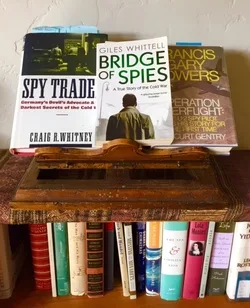
        The plot of the upcoming film deals with the downing of a U2 spy plane over Russia, the subsequent capture of its pilot, Francis Gary Powers, and his exchange for a prisoner held in the States, a Russian operative working in the U.S. under multiple aliases, one of which was Rudolf Abel. Hanks plays American lawyer James Donovan, who helped negotiate the exchange. Publicity for the film, with script by Matt Charman and Joel and Ethan Coen, does not credit the first book on my list as a source, though it shares the same title, and subject matter.
        Giles Whittell’s non-fiction book, Bridge of Spies A True Story of the Cold War tells the twin tales of Powers and Abel leading to one of the most iconic events of the Cold War, when the two were traded for one another at a popular locale for such swaps, the Glienicke Bridge, which spans the Havel river and connects the Wannsee district of Berlin (under western control during the cold war) with Potsdam (under the control of Eastern Germany at the time.)
        Mr. Whittell is Washington correspondent for The Times, and this book is written in straightforward, journalistic prose that reads like a thriller because it is one. If you read on of the three on this list, this is the one. 
        One of the most troubling points in my research was interviewing a man who had been a high-ranking police officer in East Berlin during the 70’s and 80’s. A criminal investigator for the Volkspolizei. One point he made repeatedly when we spoke was that in the 80’s, they closed all of their cases. All of them, he emphasized proudly. Well, they had informants, both paid and coerced by other means, in every building, pub, workplace and neighborhood in Berlin. They could arrest anyone they wanted for any reason at any time. Of course they closed their cases! But the man, now around seventy, wasn’t exactly boasting. What I came to realize was that he was trying to convey to me that the department was an efficient one. I was an author, asking specific questions about training, development, and execution of the law in practical terms. And he was a professional, proud of the work he did. Of course I empathize with the oppression that was endemic at this time, and we all know of people imprisoned for their beliefs or opposing the government. But human beings commit all kinds of crimes, and there’s no reason to believe that rapists and murderers and thieves disappeared during the Cold War. I had never given much thought to this man, and others like him, who were the ones tracking those people down, facing all the usual difficulties and dangers of police work as the war raged on. Yes, they were an arm of the MfS (Ministry for State Security, or Stasi) but they also had a job to do- or try to do- within their own oppressive system. 
        The man I spoke with seemed to me somewhat heartbroken that this work had not, in the end, meant, in the end, what he’d hoped it would mean for him. He was strapped financially, had lost his sense of position almost entirely. Twenty-five years after the fact, I think he was still confused by it all, disoriented even. Meeting him was a great reminder to me that important players in history are still human beings. Complex, often conflicted, not easily summarized or pigeon-holed. 
        One such complicated character, a looming presence in East Germany during the Cold War, and perhaps the best subject of study for those who want a comprehensive sense of the swapping of prisoners throughout the entirety of the era, was Wolfgang Vogel, the East German attorney who brokered most of the important prisoner exchanges, including that of Powers and Abel. (He’ll be played by Sebastian Koch, a German film star American audiences may remember from the film Das Leben des Anderes.) Vogel, like my Policeman, was vilified when the wall came down, but his day-to-day life seems mostly to have been that of a hardworking advocate, capitalizing on the East German government’s poverty to negotiate freedom for some of its most coveted prisoners, which is to say, some of its most oppressed citizens. Spy Trader: Germany’s Devil’s Advocate and the Darkest Secrets of the Cold War by Craig R. Whitney is absolutely crammed with dangerous close calls, nefarious political maneuvers, and nuts and bolts of thousands of exchanges that kept the nearly bankrupt regime from crumbling sooner than it might otherwise have done. Vogel is the main character study, and his counterpart, Donovan, also figures prominently. For a lawyer, or anybody interested in the law, this is a fascinating book. 
        During the Cold War, information was closely guarded on both sides. In London in the 80’s, underground booksellers would sidle up to someone and whisper: “Spycatcher,” because the book had been banned in the U.K. Even though these days we are overloaded with information, then as now, there are moments that rise to the top as real news. They are usually stories that are both political, historical, and personal at a life-or-death nexus, and we gather around them, compelled to watch ourselves be defined and changed by them. One such moment in American history was this capture, trial, incarceration, and release of Gary Powers. As a result, there are many, many books about him. But why not go to the source? Operation Overflight: The U-2 Spy Pilot Tells His Story for the First Time by Francis Gary Powers with Curt Gentry, introduces us to a young man who is too antsy to follow his coal-miner father’s wish for him to be a doctor, so he becomes a pilot, who ends up being recruited by the CIA, essentially being snatched away from his wife for secret training on a brand new, almost invisible plane in the remotest portion of Southern Nevada. From there we follow him to the strange culture of a pilots’ base in Adana, in southern Turkey for illicit, though president-approved overflights of the U.S.S.R. We get the first person account of his capture, imprisonment and release. There is little analysis here, just what happened, how it happened. It’s a picture of the storm, told from the perspective of the eye. Good stuff.
        If you want to research further, you’ll have no shortage of material. Currently making the rounds is a lengthy, multi-episode documentary on the Cold War by CNN. One thing the series was critiqued for was the episode that paired McCarthyism and Stalinism. Some argued that in attempting to appear even-handed, it downplayed some of the horrors of the Eastern regimes, equating them with the U.S.’s actions at that time. (People still argue over the numbers, but Stalin killed many, many millions of his own people.) And having been born in San Francisco in the sixties, I know that the liberties I enjoyed were not the same as those enjoyed by my contemporaries in the Eastern Bloc. Both governments did horrible things. But different, horrible things.
        This documentary, along with other images, books, and movies on the subject, even when accurate, are, by matter of quantity, inaccurate, because they are brief glimpses of something that spanned decades and continents. From midcentury when the Allies began parceling out bits of Berlin at the end of the second World War, to the day in the late 80’s when the protesters streamed peacefully out of Leipzig and Dresden in a wave that would crest the Wall and lead to its destruction, the Cold War was nothing if not a massive, diverse, and global exercise in the human capacity for duplicitous aggression. 
        As for whether it matters or not that after next week our first thought of the Cold War may be an image of Tom Hanks looking earnest in a retro hat, maybe all we can do is realize that that space in our minds is precious real estate. And whatever occupies it, we should not confuse the image with the thing itself. As the saying goes, a picture of tree is not a tree. 
        And how a story is told matters as much as what is told. Not only is a picture of a tree not a tree, but poet Mary Oliver, in her recent book A Poetry Handbook: A Prose Guide To Understanding and Writing Poetry tells us that a “rock” is not a “stone.” Choice of words, and in cinema, images, is crucial to story telling. And whether it is told with a single perspective, as with Powers’ book, or the policeman looking back on his own life, or with many crafted hands such as the Coen brothers, or CNN’s big budgeted crews, these choices affect us. And if I remember the text books of my childhood, the ones that glorified Columbus and had picturesque sidebars of Native Americans without any pesky details about their annihilation, I’m inclined to take it all with a grain of salt, and a half. I don’t know if those who forget the past are condemned to repeat it, or not. But I do think that those who oversimplify the past are condemned to misunderstand that. 
        I’m hoping this’ll be a great movie. Some movies, even after all of my research still ring true and help me reflect on the era that predates me by just a bit. Alfred Hitchcock’s Torn Curtain, (1966), for example, has an escape sequence that looks like I pictured from my reading. After reading some of Kennedy and Khruschev’s dilemma’s, Failsafe, (1964), with Henry Fonda as a president with his finger on the button, also seems fairly on point, and still gives me the chills. And Das Leben des Anderes is a terrific film. Artfully done, with characters I will never forget. I’ve lived in Berlin and can’t help wishing I could’ve seen it how it was, just for a moment. That film is as close as I will come.
        A few books slightly broaden the film’s topic, but I found them of value and recommend them here.
        For first-hand, personal interviews, I recommend The Firm: the Inside Story of the Stasi by Gary Bruce, and Stasiland: Stories from Behind the Berlin Wall by Anna Funder. 
        For an in-depth global and German/American analysis of the minute by minute tipping point during the year the Wall went up, I recommend Berlin 1961: Kennedy, Khruschev, and the Most Dangerous Place on Earth by Frederick

    More Blog Posts from Lisa
  • Published on

    Why Madmen Is So Great! A Writer's Perspective on Character

    Why Madmen Is So Great: A Writer’s Perspective on Character

    I love good TV, but great TV astounds me. Mostly because there are so many things that need to come together just right for a TV show to be great. And unlike a great novel, or even a movie, those things need to come together week after week, and season after season. Madmen is comprised of remarkable acting, direction, design, music, and production values. But I think most people agree that the writing deserves to be singled out as an example of greatness, because Matthew Weiner, the show’s creator and main writer, has succeeded much like Julian Fellowes the creator of Downton Abbey. He has articulated world we have been happy to enter, full of people we are unlikely to forget.

    So here, as best as I can deduce them, are ten suggestions on how to create great characters, based on things I think Matthew Weiner has done uncommonly well.

    And for those of you who haven’t caught up on your viewing yet, here it is: Spoiler Alert.

    Ten Principles of Writing Great Characters

    Lisa Houston (by way of TV’s Madmen)

    1. Illuminate your characters. Don’t judge them.        

    Example: Don Draper

                The first episode of the first season of Madmen opens with Don Draper trying to figure out how to sell cigarettes by discussing brand loyalty with a man who is waiting on him. At first, the busboy says he could never give up his preferred brand, citing a loyalty that goes back to his days in the service. By the end of the conversation, Don has described a world where the smoker’s brand doesn’t exist, and has him ready to consider finding something else. We get it. Don is a man who could sell coals to Newcastle.
                The other defining characteristic we see in Don in this first episode is his acute interest in women, plural. One of the greatest “other shoe drops” is the end of this episode, when we see this work-obsessed womanizer go home, to his wife. But by the time that moment comes, we’re having too much fun with Don to judge him.
                This rule is really just a version of the old adage, “show, don’t tell,” but I think these words are a bit stronger, and perhaps better at dissuading the writer from moralizing, which can be a motivation lurking behind too much telling.
                Illuminate. Don’t judge.

    2. Calculate the True Cost (of your characters’ actions on themselves and others.)

    Example: Betty Draper

                Like the urge to idealize your characters, it’s tempting to get them out of jams without a scratch. Why? Because it’s a scary feeling to have your characters car drive into a ravine when you don’t have a clue how to get a car out of a ravine. But remember, if you end a chapter with your character’s car driving into a ravine, chances are good the reader will go on to the next chapter.
                Don is so smooth. It’s not impossible for us to assume he’d get away with sleeping with other women. But isn’t it a terrific twist when Betty, perhaps out of boredom, reveals to her psychiatrist that she can feel that Don’s touch in bed is sometimes tailored to some other woman’s needs? Betty could easily have been a clueless cliché. Instead, we see a very plausible example of what would really become of a woman so betrayed, not only by Don, but by her own mother’s education of her to rely upon her appearance to bring her happiness. Perhaps such a woman would struggle with self-esteem issues in any marriage, perhaps she would not be the most loving mother herself. And on Don’s part, no, he wouldn’t get away with it. He’d be divorced. At least twice.
                Calculate the cost.

    3. Know your time, place, and culture.

    Example: Smoking and the office staff.

                There are plenty of period bon mots, songs, TV shows, and news items of the day dropped into this show. Some operate merely as color. But others are integral, as in the pilot episode, which gives us the newsflash that cigarettes are bad for you, even as the shot pans down the bar to show person after person after person puffing away. It’s not 1950 when nobody cared. It’s not 1970 when everybody knew. We know exactly when we are.
                The other era-defining issue in the first episode is the role of women in the workplace and for this Weiner gives us an expert teacher in Joan, and provides her with a novice whom she must indoctrinate. Peggy appears first as a device for a detailed walk-through of the office. Now, we know when we are, and where we are. And to further understand the place, we meet the three telephone operators who are aware of the inner workings of the place due to their supernatural ability to eavesdrop and control avenues of communication. The three function like the witches at the beginning of Macbeth. Their raised eyebrows about Eleanor, the secretary of Don’s that Peggy is there to replace, and their instruction to Peggy that she let Don see her legs, let us know that there’s been something shady going on in the recent past, and intones dark things to come.
                Know your time, place, and culture.

    4. Let your characters change, even if it’s for the worse.                           

    Example: Ken Cosgrove

                I had hopes for Ken. After all, he’s a writer. I thought maybe he’d get out alive. But the world of advertising has its claws in. He started out as a fun-loving, creative, self-confident guy, but Ken later becomes a half-blind, stressed out, vengeful mess. Wouldn’t you be? This relates to calculating the true cost for your characters. What would happen to someone with the soul of a novelist, who goes to work at Sterling Cooper?
                Let your characters change.

    5. Differentiate your characters.

                Examples: Peggy and Joan

                I heard an interview with Matthew Weiner recently in which he said that he loved the idea of Peggy and Joan walking down the hall together. That is one of the great things about the show. People are different and often misunderstand one another. Not only men and women in relationship, but same sex characters are often on quite different pages. Pete and Don don’t understand one another. Even Roger and Don are very different. Joan and Peggy have some great scenes, but they’re not best friends. They wouldn’t be.
                Differentiate your characters.

    6. Have your characters say nothing, eloquently.

    Example: Megan, Betty, and Joan.

                It can be fun to read a novel or see a TV show or movie where everyone is equally verbose, but after a while, it gets dull. We feel like we’re hearing a rant from the author, rather than meeting individual characters.
                Even in workplaces that attract talkers, like legal settings or journalism, not everyone expresses themselves with equal skill. And even articulate people need some time to let the wheels turn. As in music, the rests are as important as the notes. Who can forget Don Draper, lying on his office sofa, staring at the ceiling, seeing God knows what. And the silence of the women is very dramatic at times, especially when we feel they may be bursting to say something, but know it will get them into loads of trouble. There are many times in the series when Joan says nothing. Even after she is made a partner the status she enjoys is different than the men’s. She often keeps her mouth shut, and her silence is eloquent, and appropriate to the period. Don’s second wife Megan’s silence at key moments seemed to me an indication that she never quite fully bought into Don’s world, a world where you can talk your way into and out of anything. Likewise Betty. Some of her most expressive moments are when she is smoking, and watching, and thinking.
                Who people are is not entirely down to what they say.
                Have your characters say nothing.

    7. What do they know, and when do they need to know it?

    Examples: Extramarital affairs and Office shake-ups.

                Weiner does a great job keeping track of who knows what, and who doesn’t, and uses it to create tension. What the wives know about their husbands, what people know or don’t know about various plans for the agency, creates tension in relationships and shows us who they are.
                It’s tempting when one is first feeling inspired to write “this happened, and then this happened and then this happened.” But the timeline is one thing, and who knows what when is another. Even a sentence like “I got up to go to the store,” gives something away before its necessary. Why not get up first, and make us wonder where you’re going?
                There’s a very funny moment in the final season when Don’s current, ditsy secretary demands to know what’s going on with the agency, which has been in turmoil for some time. The moment is funny in part because it comes so terribly late. Poor dear, she’s the last to know.
                What do they know, and when do they need to know it?

    8. Bring in outside eyes.

    Example: Don’s brother, Peggy’s secretary.

                One tool to help avoid idealizing your characters is to show us people who see them from a very different perspective. One of the darkest moments of the series was when Don rejected his own brother. If we had been tempted to look past his womanizing and consider him a charming rogue, that episode pretty much put an end to that.
              As the lone creative woman in the agency, Peggy is also a kind of heroine. I think she’s probably someone people are rooting for to succeed. But how does her secretary feel about her? The episode where she takes her secretary’s Valentine’s Day flowers as her own was an eye opener for me. I suddenly realized how crabby she is. I still like Peggy, but now I know, I wouldn’t want to work for her!
                Bring in outside eyes.

    9. Show a range where appropriate.

    Example: Period defining moments handled differently per character.

                This rule is sort of a combination of the rules to know your time and place, and differentiate your characters.
                Roger doesn’t really care that Marilyn Monroe has O.D.’d. While Joan is devastated. Pete Campbell is strictly Greenwich, while Paul Kinsey is inclined in a more liberal direction and even becomes a Hare Krishna. Some of the richness of the show is created by including world events that are part of all of our psyches, and showing the very different ways the characters relate to them. A recent example of this in literature was the novel Let the Great World Spin by Colum McCann, which takes place in New York in 1974 during the real-life event of a man walking a high wire between the Twin Towers. One moment in time. Many stories.
                Madmen might have been a claustrophobic snapshot of a world that was, in some ways, very behind the times. A time capsule of a show. But we feel the outside world crowding in. Lives are being altered. People are changing. Time marches on. This was an era of bouffant hairdos, and flower children.
                Show a range where appropriate.

    10. Keep your promises, but surprise us.

    Example: Who knows?

                Don’t you hate it when you’re on page two hundred of a book and one the characters suddenly has a million dollars, or plays the piano? Or the book opens with a chase scene and then nothing happens for three hundred pages?
                If you begin a book with “It was a bright, cold day in April, and the clocks were striking thirteen,” it had better be a futuristic dystopian masterpiece. And it is. (George Orwell’s 1984.) If you tell us “it was the best of times, it was the worst of times,” you’d better show us some of each. Likewise, if you open with “all happy families are alike, and all unhappy families are unhappy to their own particular fashion,” we’re going to expect to see one very particular form of tragedy.
                The name of the play that was the basis for Casablanca was Everybody Goes To Rick’s. And the opening narration of the film tells us that everybody who comes through Casablanca is desperate to get out. So when we meet a guy named Rick who seems to be just hanging out there, we are intrigued. Everybody wants to get out of Casablanca, except him. What can the reason be? We don’t know. But we do know that everyone comes to Casablanca, so we expect the reason to show up. When the line comes… “of all the gin joints in all the towns in all the world, she walks into mine,” it makes perfect sense. We knew it all along, and that feeling of inevitability is delicious.
                I don’t know what will happen on the last episode, but let’s consider what we do know: To don something is to put it on. To drape means to cover. We know that Don Draper is hiding something. And we know that he can sell anything to anybody.
                The name of the pilot episode was Smoke Gets in Your Eyes. Assuming that Matthew Weiner is going to keep his promises, but surprise us, I’m thinking that some of that smoke is going to clear. I think that the amazing salesman may finally sell himself a little bit of the truth.
                But I’m also thinking that things might get a little bit crazy first.
                After all, the name of the show is Madmen.

    To subscribe to this blog, please fill out this contact form.

    *

    *

    *

  • Published on

    Downton Abbey Season 5 Finale References

    Downton Abbey Season 5 Finale References

    The reference in this week’s episode that jumped out at me came from Mrs. Hughes. Teasing Mr. Carson a bit as they discuss how responsibilities might be divided at their new investment property, she said that she would be left with supervising the “mythical maid of all work.” As it happens, I am in the middle of rehearsals for a production of Gilbert and Sullivan’s “The Pirates of Penzance,” in which the character Ruth is called the “maid of all work.” The term refers to a maid who does all sorts of housework, but it can also mean anyone who has a wide variety of responsibilities, or an employee who does a variety of jobs. If you’re in the mood for another fun word, such a person can also be called a “factotum,” which keeps us in the world of the lyric stage for a moment, as the Barber of Seville begins his famous aria by singing, “largo al factotum” meaning he works at all jobs. (Latin: fac totum, do all.)  In Pirates of Penzance, in her song “When Fredric Was a Little Lad,” Ruth refers to herself as the “piratical maid of all work.”

    As an American, I found it interesting this week to hear “chum” used as a verb, when Mary offered to “chum Tom for this drive,” meaning to accompany him. And another piece of shooting lingo made it into the episode when she said, “we’ll see them in “the butts.” The butts are the places of built up turf where the shooters stand, partially hidden, as the beaters drive the grouse out towards them.

    Tweeny: Anna used this word, explaining how she took a job further up north to get away from her stepfather. Tweeny is short for between-maid, i.e. a maid who assists other maids, and I think the implication was that she took any job she could get to get away.

    A reference to “Hobson’s choice” was made by the Sinderby’s butler, Mr. Stowell. (Boo, hiss!) The term means the appearance of a choice, with no real choice, i.e. “take it or leave it.” It is said to originate from a stable owner named Hobson from the mid 19th century who, despite the fact that he possessed a livery of forty horses to rent, was only willing to rent out whichever horse was nearest the door. Thus the appearance of a choice, but no real choice. British playwright Harold Brighouse used the term for the title of his play, which was popular in London in 1916. Maybe Mr. Stowell saw it, as he bragged to Thomas: “I am not a novice anywhere.” The great Charles Laughton played Hobson in a good movie version of the play in 1956, fyi. It is a story of an alcoholic shopkeeper and his three daughters, which has echoes of King Lear and the rivalry among his three daughters.

    The term “Fenian” was used this week, and not for the first time in the series. In season two, when Lord Grantham began to accept the reality of Sybil’s marriage to Tom, he said to Lady Grantham, “so, we’re to have a Fenian grandchild.” This week, it was used by Mr. Stowell in a derogatory way, revealing even more of his unpleasant prejudices towards Tom. When Thomas (footman Thomas, not son-in-law Tom Branson) is speaking with Mr. Stowell about the arrangements for the grouse shooting, he points out that Mr. Branson is a good shot, to which Mr. Stowell replies, “Is he, indeed? I suppose that was his training with the Fenians.” Perhaps Mr. Stowell is implying that Tom fought on the side of the Irish in the Irish War of Independence, which took place from 1919 to 1921. Fenian originally referred to a member of the secret Irish Republican Brotherhood, which began in the 1850’s and had its counterpart “the Fenian Brotherhood,” later known as “Clan na Gael,” in the U.S. Fenian has also been used as a derogatory term for Catholics, so perhaps Mr. Stowell’s remark had that overtone. Fenian can also be used to refer to anyone in favor of Irish Independence. (I am a Fenian!)

    Maggie Smith is such a treasure, and so magnificent in this role that there are posts online encouraging people to get in touch with their inner dowager countesses. This week we heard the Dowager Countess’s home referred to as “the Dower House.” Let’s take a look at that word.

    Dower n.

    The portion of a deceased husband’s real property allowed by the law to his widow for her life.

    “Dowager” refers to the widow of a titled man, and helps to differentiate her from the living spouse of holder of the title. For example, the widow of a king may be a dowager queen. It is also used colloquially to refer to any dignified elderly lady.

    The word dowry, as we know, is used to refer to the bequest a bride brings with her to marriage, but previously “dowry” was also used to refer to the dower which a widow retains.

    Speaking of the Dowager Countess, this week she referred to meeting Prince Kuragin at the royal wedding and falling madly in love. I think she was referring to the wedding in 1874 between Grand Duchess Maria Alexandrovna of Russia to Prince Alfred, Duke of Edinburgh, which took place in St. Petersberg. Much like the Princess Kuragin, Grand Duchess Maria fled when her relatives’ dynasty was overthrown in 1917. She died in Zurich in 1920.

    Misty-eyed, thinking of her past, the Dowager Countess declared, “Remember, we were the Edwardians.” If she survives a few more years, till 1930, she will have the chance to read Vita Sackville-West’s novel “The Edwardians,” though perhaps she wouldn’t like it. It portrays the British aristocracy of the time as superficial and hypocritical. The following passage about the novel’s main character, Sebastian, has chilling echoes of what the Dowager Countess felt after she and Prince Kuragin parted.

    He imagined that all life had been suffocated for ever within him, stifled under the magnificence of ceremonial and the shroud of his crimson cloak. Since he had consented to lend himself to this mummery, he allowed a spirit of complete abnegation to possess him; henceforward he would stand woodenly; move woodenly; go where he was
bidden; bow; respond, according to what was
expected of him; a terrible passivity overwhelmed
him, and he accepted it with fatalistic superstition.”

    Thieves’ Kitchen:

    Lord Grantham, speaking with sympathy for Mr. Murray, whose legal skills have been much utilized in representing first Mr. Bates and now Anna, says, “We'll have him running a thieves' kitchen before we're finished.” A thieves’ kitchen is a slum or place where children are lured into crime. Perhaps the best known thieves’ kitchen in literature is that of Fagin in Charles Dickens’ Oliver Twist.

    Finally, I have one reference left over from last week, namely, the beautiful reading Mr. Carson gave at the memorial. His words are part of a well-known poem called “For the Fallen” written by British poet Laurence Binyon. The poem was written in 1914 and published in the Times. It is often read on Remembrance Day, November 11th, when people pause at eleven minutes after eleven o’clock in the morning to memorialize the dead.

    The poem is included below, in its entirety.

    Un-spoiler Alert: how could I resist looking ahead to next season by researching events in British history in 1925? But I almost wish I hadn’t, because I now have a fairly good idea of one significant plot twist that’ll be coming along next season. I won’t share it here, as I am no spoiler, but if you want to know, just write to me to ask.

    See you next season.

    LH


    For the Fallen
    By Laurence Binyon


    They went with songs to the battle, they were young.

    Straight of limb, true of eyes, steady and aglow.

    They were staunch to the end against odds uncounted,

    They fell with their faces to the foe.

    They shall grow not old, as we that are left grow old:

    Age shall not weary them, nor the years condemn.

    At the going down of the sun and in the morning,

    We will remember them.

    They mingle not with their laughing comrades again;

    They sit no more at familiar tables of home;

    They have no lot in our labour of the day-time;

    They sleep beyond England's foam