• Published on

    Sedaka, an Appreciation

    It’s New Year’s Eve, 1975. My best friend, Sheila Gough, and I have decided to stay up till midnight to hear Casey Kasem’s countdown.

    As often happens in my childhood memories, the parents are absent. It was the 70s. It was Berkeley. Parenting is a relative term. In this case, it worked to my advantage. Sheila and I had a blast staying up late. Older siblings were likewise elsewhere, no doubt having their own fun. 

    As midnight approached, we did not get sleepy. We got more and more excited. Sheila and I were in agreement: “Love Will Keep Us Together” had to be number. It simply HAD to be. Structurally, it’s an odd song. It starts with the hook, right out of the gate. No time to say “don’t bore us, take us to the chorus,” this song jumps right in.  And then there’s kind of a second, turn-around hook when the music halts. STOP! (‘Cause I really love you!) There’s no buildup or delay in this song. It’s all payoff, all frosting. 

    The act that performed it was a throwback, visually. Much more conservative-looking than my other favorites at the time. Carly Simon, with her loose flowing hair and mutable sense of pitch. Or Carol King, a high school classmate of Sedaka’s, who had curly hair and played piano, like me. (One looks for such comparisons when one is young, and my songbook of King’s “Tapestry” was dogeared and beloved.) But Tennille, with her Dorothy Hamel bowl-cut, gave off the vibe of a traditional “lounge” singer. And the Captain was dressed like, well, a captain. But God, I loved that song. 

    For you kids out there, loving a song back then meant buying the 45, a lightweight little mini-record, which I did at Tower Records down on Durant Ave, right above Telegraph Avenue, next to the pinball parlor. When I didn’t have the 45 for a song I wanted, I would just sit on the front porch with the transistor radio on my lap, and there were so many radio stations in those days, I could just turn the knob from station to station until I found it. Time was abundant before the Internet. “Black Water” by the Doobie Brothers was a particular favorite, and remember one sunny afternoon sitting on the front port, to find it, again and again and again. It is a warm, comforting memory.

    That New Year’s Eve was one of those crystalline moments in childhood when you really feel like you understand the world completely. You know for sure what’s good, and what’s bad, and you just really really really want the world to agree with you. If it doesn’t, you don’t know how you’ll go on. Happy as we were, Sheila and I were prepared to be outraged if “our” song wasn’t number one. We were ready to be devastated. There was a lot riding on that night. So much more than a song. 

    Midnight arrived. I was sitting on the kitchen counter. Sheila was sitting at the table with her ear close to the radio. 

    Casey’s melted-butter professional-announcer voice let us know it was time for number one. We held our breath. The song played. 

    “Love Will Keep Us Together.” 

    I jumped off the counter and Sheila leapt up and we danced around the kitchen as the music played. 

    I didn’t know at the time who wrote the song, and I didn’t care, but another song that year had acquainted me with the composer. ’75 was the year Sedaka recorded a song he’d hat a hit with when it came out in ’62, “Breaking Up Is Hard to Do.” I fell in love with that song. And if I fell in love with a song, I was obsessive. There was almost a thirst, a desperation to hear it. Once, I even put cash in an envelope and sent away for my very own copy of K-Tel’s “22 Explosive Hits!” Full of teenage tragedy from the 60s, I played it incessantly, listening to songs like, “It’s My Party” and my personal favorite, “Tell Laura I love her!” This was Sedaka’s formative era, with his hits “Calendar Girl” and “Happy Birthday Sweet Sixteen!” But he also became a quintessential sound of the 70’s, with his song “Laughter in the Rain,” and another favorite of mine, the catchy “Bad Blood”, with its farty clavinova keyboard sound embracing a funkier 70s style. 

    I never met the man, but as I get older and more of my favorite artists pass away, I realize how important some of these one-sided relationships have been to me. I was recently bereft at the death of Diane Keaton, whose constant reinvention gave me permission to be more myself. But those very early influences stick. Along with a handful of artists, Neil Sedaka helped light the fire of my passion for music. He also gave me a great example of truly good singing. There was a sweetness to his voice, a clarity, an ease. I distinguished it, even as a kid, as something special. I would later understand that Sedaka had an ease of vocal production that is simple, but not easy to achieve. And to this day, any time I hear Sedaka’s bright silky voice— which seems to have happiness baked right into the vibration— I feel happy. 

    And any time I hear “Love Will Keep Us Together,” I am transported to that night, that kitchen, that friend. A feeling of love that is permeating, comforting, and yet thrilling. Our song was number one! And, just for that moment, the world made perfect sense. 
  • Published on

    A Great Christmas Movie’s Gotta Have _______ !

    Picture
    Picture
    Picture
    Image description
    A Great Christmas Movie's Gotta Have...

    ​​1. An Existential Crisis. 

    Whether it is personal, professional, or romantic, lots of great holiday movies bite off a big piece of introspection. Many plots take this as far as tackling the topic of suicide, and here I must insert a fact: The suicide rate does not go up over the holidays. That is a dangerous and commonly held misconception. Suicides, sadly, occur throughout the year. But winter can be a time for existential questions. It’s a Wonderful Life (1946) is perhaps the most famous movie example. George Bailey ponders the question of whether the world would be better without him. Suicide is also a theme in director Frank Capra’s other Christmas movie, Meet John Doe, (1941) with Barbara Stanwyck and Gary Cooper. At its core, A Christmas Carol is an existential crisis, so I’ll go on the record with my favorite version, which is the one with British actor, Alistair Sim. A Christmas Carol, (1951), released in Britain as Scrooge, ​it was crafted with the taut austerity of postwar British cinema. (It was filmed in a studio in Walton-on-Thames whose buildings had been requisitioned for use during the war.) There are no splashy effects here, just a great actor portraying Dickens’ greatest character.          
    Image description

    ​2. Romance
     
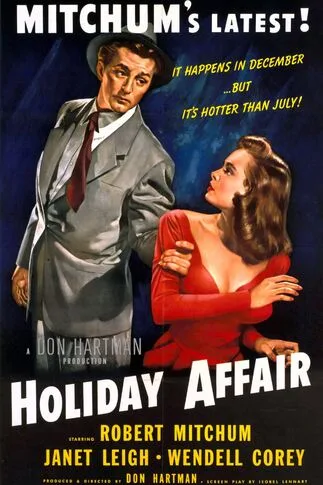
    You will notice that what I consider the greatest Christmas movies were all made during and just after World War II. This is no coincidence. Hope was the greatest product manufactured on the home front, much of it in Hollywood. Even the more modern A Christmas Story deals with a young boy’s yearning for a rifle in 1940, a time when the country was summoning its courage to stand up to fascism. And many of the holiday romances have wartime themes. In Holiday Affair, (1949) with  Janet Leigh, Leigh plays a widowed single mother, unable to move on from her attachment to her husband, who was killed in the war. Robert Mitchum joins her in this sexy romantic comedy with post-war depth, and a really cute kid.

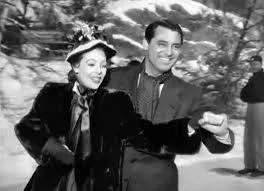
    The Bishop’s Wife (1944) with Loretta Young, Carey Grant, and David Niven, remade later as The Preacher’s Wife (1996) with Whitney Houston and Denzel Washington, deals with a somewhat stale marriage brought back to life by the wife’s romantic friendship with an angel. Just like the angel Clarence in It’s a Wonderful Life, a heavenly visitor prompts introspection. The angel is a great device, because the unhappy wife gets to have a little fling, but we still have a happy ending when she stays in a loving, but imperfect marriage. (The Preacher’s Wife is a lovely movie, but I haven’t watched it since the sad shock of Whitney Houston’s death. I hope someday I can enjoy it again.)
                
    Speaking of remakes, You’ve Got Mail (1998) is a remake of The Shop Around the Corner (1940). Both are delightful, You’ve Got Mail for the unbeatable comedic tone of writer Nora Ephron, and Shop Around the Corner for its adherence to the original Hungarian stage play. There's great chemistry between Jimmy Stuart and lesser known but wonderful actress, Margaret Sullavan. Sullavan and Stuart played summer stock together early in their careers and they have a great rapport. Their antagonistic chemistry sets us up for the denouement of having fallen in love with the last person you’d hope to fall in love with. This is a whole subgenre of romantic film which could be called “When the Wrong Person is the Right Person.” Shop was directed by Ernst Lubitsch, who brings with him the sensibilities of the Berlin theater he cut his teeth on. Though not directly war-related, the poignancy of the modest retail workers struggling to find love as they make ends meet, probably resonated with wartime audiences.
    Image description
    The threat of a corporate takeover plot in You’ve Got Mail has some roots in another great holiday romance, Desk Set (1957.) Katherine Hepburn and Spencer Tracy are in their eighth movie together here, and in top form. It has the customary arc of a holiday romance, with our lovers on opposite sides of a workplace conflict, but Desk Set also has an element that is often stripped out of holiday movies these days: a highly intelligent woman with a valuable professional competence. The quintessential Hallmark movie often makes the woman’s profession an obstacle. Her complex intellectual urban life is seen as at odds with the simpler, more honest rural existence. The Hallmark Industrial Complex is a topic for another time, and I admit frankly that I watch them, but the point is, the woman’s smarts are at best window dressing. With Hepburn in Deskset, the woman’s smarts are the sexiest thing about her.

    Another romance with a smart-but-not-domestic female is a personal favorite of mine, Christmas in Connecticut. (1944). Barbara Stanwyck is living a successful but entirely phony life as a prototypical Martha Stewart, writing a magazine column about an idyllic life on a farm with a husband and a baby, none of which she has. The movie embraces Stanwyck’s lack of wifely attributes, and celebrates her wit and sexiness when she falls in love with a handsome war hero, Dennis Morgan. In its light hearted way, this movie foreshadows the pressure women would feel post-war to give up their wartime freedoms and settle down to traditional roles. And Miracle on 34th Street (1947) deserves a nod here as well, with Maureen O’Hara as an unapologetically competent and successful working woman.

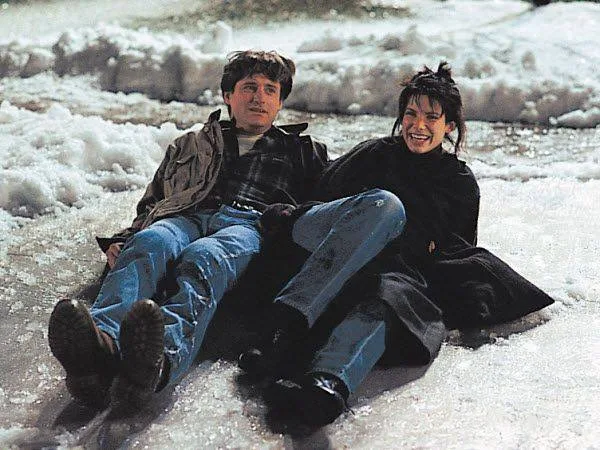
    I won’t leave the romances without including a favorite of mine from the nineties, While You Were Sleeping, (1995). Sandra Bullock plays a forlorn subway employee with no family, and only a romantic fantasy for companionship. With the object of her fantasy in a coma, Bullock is mistakenly welcomed into the bosom of his family Christmas, where she promptly falls in love with her coma-laden imaginary lover’s brother. Hilarity ensues, and the movie picks up the romantic existentialism of the season, asking the biggest relationship question, “what if I chose the wrong one?” But it also fits into the Crazy-but-happy Family genre, which leads us to our last category:
    Image description
    ​ 3. Coming Home Again
     
    Luisa May Alcott’s Little Women deals with a loving family living through the hardship of a father away at war. There are several screen versions of this holiday classic. Though I absolutely love Mary Astor as Marmee in the 1949 version, I struggle with June Allyson as Jo, and will take Katherine Hepburn as Jo in the '33 version any day. A highlight for me is when Hungarian actor Paul Lukas sings Tchaikovsky's "Nur wer die Sehnsucht kennt,” evoking the yearnings of a lonely refugee. But the film’s centerpiece is Hepburn, who captures the struggle with gender conformity brilliantly, as she would again in Sylvia Scarlett (1935). 

    In this family-at-home vein, you’ve also got The Man Who Came To Dinner (1942.) Though directed by William Knightly, it’s definitely Capra-esque, with a whacky household in chaos like You Can’t Take it With You, which Capra directed in ’38. (Both are based on stage plays of Kaufman and Hart.) Monty Wooly plays the unwanted houseguest with grouchy grandiosity. It’s a very different character than the sweet old gent he plays in The Bishop’s Wife. Bette Davis would’ve been a shoo-in for the glamorous movie star role, but apparently fought for the role of Wooly’s secretary, whose romance is at the heart of this ensemble piece which includes the fluttery, high-voiced comedic gifts of Billie Burke as the matriarch.

    And for a family story with romance and homecoming themes, Meet Me In St. Louis (1944) gives you a full year of holidays. Mary Astor is wonderful in a maternal role here as well, and this movie has the most poignant Christmas song ever, Have Yourself a Merry Little Christmas sung by Judy Garland to comfort her little sister, Margaret O’Brien, at the prospect of moving away from their beloved St. Louis. 

    I’ve also got Stuart Saves His Family (1995) cued up, because Family Dysfunction and Christmas Fun are synonymous. 
    Image description
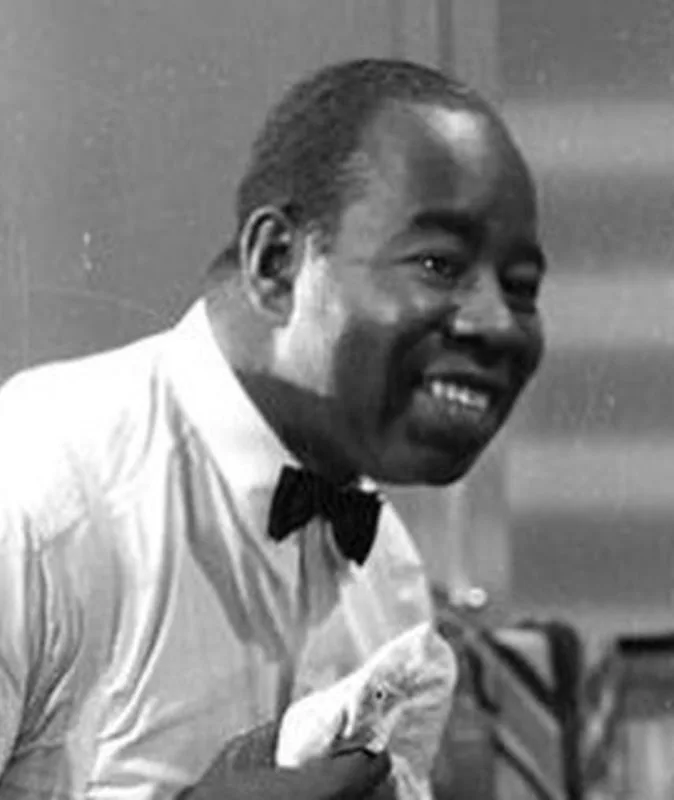
    A somewhat lost gem, though less so these days thanks to Turner Classic Movies, Barbara Stanwyck and Fred MacMurray star in a movie about going home again called Remember the Night (1940). It’s gritty, and more serious than some holiday movies, and I love it. As unlikely a plot as you’ll ever find, MacMurray is a D.A. prosecuting Stanwyck for shoplifting when he ends up bringing her home for the holidays. This is a movie about poverty, generosity, and the value of chosen family. Sadly, as with many films of this era, the people of color, if present, portray servants, often with exaggerated emotions and low intelligence. These cameos are cringeworthy and truly lamentable, through no fault of the talented performers, often intended as background humor to a more serious story. In Remember the Night, MacMurray’s servant is played by Fred Toones. Known by his stage name, “Snowflake,” Toones made no fewer than two hundred movies, often uncredited. These stereotyped elements are also present in It’s a Wonderful Life, where the frisky young war hero chasing the housekeeper, Annie, around the table doesn’t seem so funny these days. It is worth stating the obvious, that because of the prejudices and discrimination of the era, these movies are the stories of mainly white people, though many of these secondary and stereotypical roles were played by stars in their own right. The role of Annie was played by Lilian Randolph who, in addition to making dozens of films, was a radio star and later appeared on various 70s TV shows. 
    Picture

    Actor Fred Toones

    Picture

    Actress Lillian Randolph

    There are a slew of movies in which a going home message is overtly religious, signaling a return to faith, and belief in God. These movies have nuns and priests who are appropriately angelic. Loretta Young and Celeste Holm in Come to the Stable (1947), Bing Crosby in Going my Way (Best Picture Winner 1944) and The Bells of St. Mary’s (1945). These are pretty sugary but if I’m in the right mood, they are a treat. 

    White Christmas (1954) is many things. A backstage romance first and foremost, but I’d put it as a coming home story in the fundamental sense of men coming home from war. Bing Crosby and Danny Kaye play two veterans trying to help their old commander. To do so, they reassemble the whole platoon, all of whom leave home on Christmas, reminding us that home is at its essence with those you love, which here is the brotherhood of comrades in arms. The comedy of Mary Wickes, and Rosemary Clooney's crooning are highpoints for me.
     
    So, existential crises, life-changing romances, and home and togetherness, that about covers it. But there are no rules when it comes to what comforts. I won’t go so far as to say “I never met a Christmas movie I didn’t like,” but I will watch just about anything, and am often surprised by the emotional punch a mediocre movie can pack. Midnight Clear (2006) – not to be confused with a war movie of the same name from ’92— stars Stephen Baldwin as a homeless, unemployed alcoholic. On Christmas Eve he is desperate, and about to rob a convenience store. If I were a movie critic, which I’m not, I’d call it “uneven,” but on the day I watched it, it was intensely moving and just what I needed. Yesterday I had a cozy double feature of two pretty awful Chrismas movies. Jingle all the Way (1996), starring Arnold Schwarzenegger and Sinbad, made me laugh out loud almost continuously, and in A Christmas Karen (2022). Michele Simms made me cringe and laugh and cry in a Scrooge retelling, totally unsuitable for children, but at times heartwarming. 
    Image description
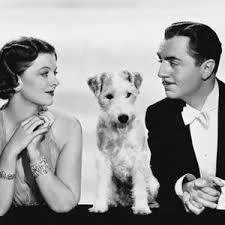
    ​But for many, the best Christmas movie may be no Christmas movie at all. Home may not be an inviting place, or it may not exist anymore. Some people are not in a relationship, and don’t hope to be. Like the alcohol and sugar that others overindulge with, for some, holiday movies can be toxic, and skipping the genre all together may be the way to go. Or you might choose something with a lighter, less sentimental approach. Two of my favorite people to spend time with at the holidays are Nick and Nora Charles. The Thin Man (1934) and After the Thin Man(1936) are set at Christmas and New Year’s respectively. Both are wise-cracking detective stories and, being made during the Great Depression, these movies have a very practical approach. Nick and Nora are madly in love but they don’t get gooey about it. In both movies, Nick and Nora are dealing with comically dysfunctional families, and they throw parties which are full of rowdy, bawdy characters. And they drink. A lot. 
    Image description
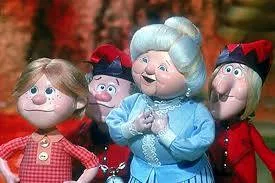
    And now, batting cleanup, I’ll put in some TV picks. I was born in the golden era of Christmas TV special. Rudolf, the Grinch, Frosty, and A Charlie Brown Christmas all debuted in the first years of my life. But also from this era is the lesser-known Rankin/Bass musical The Year Without a Santa Claus (1974). It’s an hour long, motion-animated TV special, in the tradition of Rudolf, Frosty, et al. It’s a nice story, with sweet themes of course, but I love it for its main character, Mrs. Claus, voiced by the fabulous Shirley Booth. Famous to TV audiences as “Hazel,” Booth was a devoted stage actress. She made only four films, and this performance was her last before retiring. Santa is voiced by Mickey Rooney, and the other reason to watch is the songs, which include “Blue Christmas” and “Here Comes Santa Claus.” It’s great for the kids, but if you don’t have kids, you have my permission to watch it anyway. Bonus: the video of this show usually includes a short documentary on the art of motion-animation which is quite fun. (I'll include the clip of my favorite song, "I Believe in Santa Claus", below. 

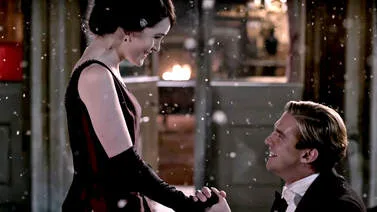
    Don’t forget that many tv series have Christmas episodes, and the internet being what it is, I’m sure you can find your favorite show’s holiday episodes if you try. One of my favorite series, Monk, has several good Christmas episodes, and one other I love to watch this time of year is Downton Abbey’s Season 2 Episode 9, Christmas at Downton Abbey featuring Matthew and Mary’s romance. Here in San Francisco, you can even go see Golden Girls Live: The Christmas Episodes, which is an annual performance. The Dean Martin Christmas Special 1968 is a blast, i
    f you can look past the sexism and booze jokes, and is available on YouTube. 

    And finally, speaking of YouTube, a note on how we watch. It changes from year to year, but right now you can watch The Bishop’s Wife on YouTube, and probably some of the othrs listed here. I take advantage of all the different video platforms, but I still miss the unity of the big three channels. I well remember waiting with great anticipation for the night that Rudolf or Frosty or the Grinch would be aired, and hearing the words “it’s on, it’s on!” ringing throughout the house. So, as we sit down at the Christmas Movie Table, which is groaning and heavy with streaming, cable, and rentals, let us not forget the lowliest of the video universe, broadcast. Broadcast is the Charlie Brown’s tree of TV viewing options. Here in the East Bay Area, It’s a Wonderful Life sometimes plays on Christmas Eve on the City of Richmond’s public access station. It’s a grainy old print, but knowing that others are experiencing the jingle of Clarence’s bell at exactly the same time as I am, something about that just feels like Christmas.
    Picture
    Wishing you and all those dear to you
    the happiest of holidays! 
    ​Love, Lisa
  • Published on

    The Imperfect Dog

    Image description
    I am often confounded by the behaviors of human parents, especially when they are hurrying their children away from my little dog, “Gadget.”
    ​     Gadget has butterfly ears and a black button nose. He is fascinating to little children and babies and loves nothing more than to be petted by them. When parents out on a casual walk can’t spare even a few seconds to allow the child to delight in something that obviously delights him, well, it kind of makes me wonder about priorities. 

    There used to be a child in my neighborhood who particularly loved dogs. She was mesmerized at the sight of me walking any one of my pack. But on the child’s walks around the block, even as a toddler, her parents never had time to say hello. As the child grew up she was able to take walks by herself, and once free to do so, she always stopped to visit with my dogs and was highly curious to learn their names, where I got them, what breed they were, and everything I could tell her about them. She also spoke with pride about her passionate love of all creatures, great and small. If she had rented a billboard that said “I LOVE ANIMALS” this girl could not have communicated it more clearly. But her parents had never given her a pet. I don’t know the family well. Perhaps there were allergies involved, or bad experiences with pets or animals, but it seemed a sad thing to me, and slightly ironic. Both parents worked from home. Their job? Running a website on child rearing. 

    I’ve seen a similar blindness in people’s attitudes about their dogs. There’s a hurry, a perfectionism, and a set of priorities that often strikes me as a bit off. Perhaps it’s an American thing. Or a twenty-first century thing. But sometimes, we seem to have more important things to do than to love. 

    At first with a new dog, as is in human relationships and marriage, there’s a bloom on the rose and people have stardust in the eyes. If there is an awareness of a problem, it is minimized, or assumed that the somewhere down the line, it will be solved. But mostly, it’s a honeymoon phase. That’s the time when everyone insists that their dog will be a therapy dog because the world must be made to benefit from this magnificent creature, and the dog will be an agility dog because look at the genius way it jumps and plays! These days also, this dog, this perfect four-legged creature unlike any other, will be an Instagram star, and do puzzles and use talk buttons, in between its job of comforting the sick and bereaved and winning gold ribbons, of course. But even when the expectations are more modest, things don’t always go to plan.

    A friend of mine recently adopted a new dog. This friend, after previously having had only big dogs, finally adopted a sweet little dog, and was looking forward to having a lap dog as she relaxed and watched TV. But guess what? The dog is not a cuddler. Doesn’t like it. Doesn’t want it. Won’t do it. And the dog has some behavioral issues that make the possibility of adding another dog to the pack pretty slim. So where does that leave my friend? The dog was a rescue, and my friend hated the idea of returning her to the rescue group, but frankly, she was considering it. This friend has been through a lot, and I could see how she might’ve made that choice. But when it came down to it, she realized something: she loved the dog. This little dog, who didn’t cuddle (and would never meet my friend’s original expectation,) was now beloved, and she wasn’t going anywhere.

    And it can be a big loss to discover that a dog can’t handle the dog park, or won’t sit with you at a café, or doesn’t like kids. I’ve learned in the very hardest of ways, (stories for another day,) that some problems cannot be fixed. Certain kinds of experts and professionals would consider such a statement an outrage. Some of them have tv shows, their own dogfood endorsements, and claim they can fix any issue, in any dog. And in their defense, dog professionals so often deal with dog people in denial, you kind of can’t blame those who have a certain fierceness of their “can do” attitudes. They’re used to people saying “I tried, but the dog won’t learn,” or, “oh that’s not a problem, he just wants to play,” even as the dog is chewing off half your face. But such over-optimism does a disservice to both dog and human. Fortunately a lot of professionals, and you’ll meet some of them in this space, appreciate the deep pain of a dog problem that can’t be fixed. (A solution can be found, but the solution makes the problem livable, or manageable, but it doesn’t make it go away.) 

    None of this is to imply that if you are having difficulty, especially anything impacting your dog’s safety or the safety of others, that you should not get professional help and work hard to solve the problem. But as author and animal behaviorist Patricia O’Connell notes, “be sure to find someone who is well-versed in positive reinforcement and who is just as kind to you as they are to your dog.” 

    O’Connell is an example of a professional who meets the problems of both humans and canines head on with realism, empathy, and wisdom, as evidenced in one chapter title, “When Your Dog Needs Another Home and When You Need a Hug.” These sorts of enlightened dog pros also know that within the crux of a dog’s difficulty may lie that dog person’s greatest moment of opportunity. It is a chance to love and accept the dog as he or she is, while also loving one’s self.

    I cannot remember her name, and so apologize for not crediting her, but I took an online class about reactivity in which a guest lecturer expressed this moment of realization beautifully. She was a professional therapist. She had gotten a dog she thought would be a wonderful companion, not only for her, but for her patients. She pictured the dog sitting by her side as she worked, the dog’s calm presence and unconditional love radiating throughout the session, helping the troubled people to open up and feel safe. But as fate would have it, the dog didn’t like strangers, or even people that much. The dog was in a constant state of stress with this parade of newcomers and the dog’s agitation was anything but therapeutic. As the woman came to grips with the situation, she also came to love this dog, this being, for itself, not for what it could do for her. But there was also a sense of loss. When I heard this woman’s story I was in the process of training (and loving) my first reactive dog, and I wept tears of relief as this woman expressed such compassion for herself and her own challenges. (Note: I recognize that some do not like the word “reactive” and actually, I don’t either, and use it here as a shorthand, to be discussed in greater depth on another day.) But by the time I took that seminar, I had spent dozens of hours receiving advice from professionals, both in person and online and in books, (though I hadn’t found O’Connell yet,) and this woman was the first time someone had empathized with my feelings of disappointment and sadness.  The course leader had put this guest lecturer up first, demonstrating an understanding that before I could truly do my best for my dog, I must give weight to my own feelings as well. 

    But it’s not only behavioral issues that challenge us. As I write this, Hayward, my black lab, has a growth right next to his brain. It’s called a “nerve sheath tumor” and it’s way too close to the brain to be operated on. All they can do is a short course of targeted radiation in hopes of slowing it down, but they can’t remove it. We did this treatment just over a year ago. Yesterday, Hayward had a follow up MRI. We drove for about an hour to the hospital, and I cooled my heels in a cute small town nearby, waiting to hear how it went. Finally, the vet called. “No perceptible change.” The tumor had not grown! Tears of joy wet my face and a swell of pride filled my chest. Pride? Yes, for Hayward. What a good boy!

    But sadly, we are on the topic of unfixable problems, and I must also share that the prognosis for this type of tumor, with treatment, is two years. That means, statistically, it is hard to type this, we are entering the last year of Hayward’s life. I am planning trips to the snow, lots of visits with his pitbull girlfriend, “Sushi,” and as many belly rubs as he can stand. We recently subscribed to a regular toy and treat box, so I won’t forget to give him new, weirder, squeakier toys and novel treats every single month, and I’m happy to have that reminder because like the hurried parents who rush past Gadget, sometimes I too deprioritize love. And that is my real point here. We all need reminding sometimes, that nothing is promised. This moment, here and now, with this particular pack, it’s all we’ve really got. And that’s OK. Because though it may seem that you got a dog to go running with, or to meet cute girls at the dog park, or to bark if a burglar breaks in, that isn’t the real story. You got a dog for one simple reason: because you needed someone to love. 

    As the philosopher Seneca said at the end of his letters, “and now I will come to the point and pay you what I owe.” This is the inaugural column of what will be a ten-part series. I am calling it “The Imperfect Dog.” (I’m having a little fun there, because the Imperfect Dog can be called “The ID” for short, and in some ways, a dog can be this Freudian expression of our most animal impulses. The dog who humps pillows and slathers openly at the thought of a treat, and rolls in ecstasy on a pile of something smelly. We all wish we could be so uninhibited!)

    The Imperfect Dog will cover all the usual dog topics. You will learn my views on dog parks, whether you need to be more “alpha,” and lots of good tips not form me, but from the experts and wise dog people I will introduce you to. But my purpose will be singular. My angle, my slant, my pitch: until we get out of the business of insisting that life should be as we would have it, and not as it is, we will never know a moment’s peace. And the same goes for man and woman’s best friend. These so-called problems— the throw up on the carpet, the chewed table leg, the staunch refusal to come when called, not to mention reactivity and brain tumors— these are the very moments that will teach us the most about how to love. So here’s the question I promised at the beginning: do you really love your dog? Not tomorrow, not the next day, but right now?

    For myself, I don’t have the answer, but I find that remembering the importance of the question usually sends me in the right direction, for dog and human alike.
     
    P.s. one more thing about Hayward. After the vet yesterday, I made sure to have a toy waiting for him in the car afterwards, because even if he is groggy from anesthesia, Hayward likes to celebrate getting into the car with squeaking a toy in his mouth. We people may lose track of what really matters, but it isn’t only elephants. A dog never forgets.

    Thanks for reading. Please do share this column with friends, and please don’t pee on the carpet.

    Further resources: 
     
    Patricia O’Connell’s book, At the Other End of the Leash: Why We Do What We Do Around Dogs.
     
    Though it often shelved in the humor section, one of the most seriously useful dog books I have is a picture book by artist Lili Chin. Doggie Language: A Dog Lover’s Guide to Understanding Your Best Friend has wonderfully simple drawings to help you translate what your dog is feeling or thinking in any given moment. 
     
    On a similar topic but handled very differently, On Talking Terms with Dogs: Calming Signals by Norwegian trainer Turid Rugaas explains further about understanding the meaning of various dog postures. 
     
  • Published on

    The Imperfect Dog

    Image description
    I am often confounded by the behaviors of human parents, especially when they are hurrying their children away from my little dog, “Gadget.” Gadget has butterfly ears and a black button nose. He is fascinating to little children and babies and loves nothing more than to be petted by them. When parents out on a casual walk can’t spare even a few seconds to allow the child to delight in something that obviously delights him, well, it kind of makes me wonder about priorities. 

    There used to be a child in my neighborhood who particularly loved dogs. She was mesmerized at the sight of me walking any one of my pack. But on the child’s walks around the block, even as a toddler, her parents never had time to say hello. As the child grew up she was able to take walks by herself, and once free to do so, she always stopped to visit with my dogs and was highly curious to learn their names, where I got them, what breed they were, and everything I could tell her about them. She also spoke with pride about her passionate love of all creatures, great and small. If she had rented a billboard that said “I LOVE ANIMALS” this girl could not have communicated it more clearly. But her parents had never given her a pet. I don’t know the family well. Perhaps there were allergies involved, or bad experiences with pets or animals, but it seemed a sad thing to me, and slightly ironic. Both parents worked from home. Their job? Running a website on child rearing. 

    I’ve seen a similar blindness in people’s attitudes about their dogs. There’s a hurry, a perfectionism, and a set of priorities that often strikes me as a bit off. Perhaps it’s an American thing. Or a twenty-first century thing. But sometimes, we seem to have more important things to do than to love. 

    At first with a new dog, as is in human relationships and marriage, there’s a bloom on the rose and people have stardust in the eyes. If there is an awareness of a problem, it is minimized, or assumed that the somewhere down the line, it will be solved. But mostly, it’s a honeymoon phase. That’s the time when everyone insists that their dog will be a therapy dog because the world must be made to benefit from this magnificent creature, and the dog will be an agility dog because look at the genius way it jumps and plays! These days also, this dog, this perfect four-legged creature unlike any other, will be an Instagram star, and do puzzles and use talk buttons, in between its job of comforting the sick and bereaved and winning gold ribbons, of course. But even when the expectations are more modest, things don’t always go to plan.

    A friend of mine recently adopted a new dog. This friend, after previously having had only big dogs, finally adopted a sweet little dog, and was looking forward to having a lap dog as she relaxed and watched TV. But guess what? The dog is not a cuddler. Doesn’t like it. Doesn’t want it. Won’t do it. And the dog has some behavioral issues that make the possibility of adding another dog to the pack pretty slim. So where does that leave my friend? The dog was a rescue, and my friend hated the idea of returning her to the rescue group, but frankly, she was considering it. This friend has been through a lot, and I could see how she might’ve made that choice. But when it came down to it, she realized something: she loved the dog. This little dog, who didn’t cuddle (and would never meet my friend’s original expectation,) was now beloved, and she wasn’t going anywhere.

    And it can be a big loss to discover that a dog can’t handle the dog park, or won’t sit with you at a café, or doesn’t like kids. I’ve learned in the very hardest of ways, (stories for another day,) that some problems cannot be fixed. Certain kinds of experts and professionals would consider such a statement an outrage. Some of them have tv shows, their own dogfood endorsements, and claim they can fix any issue, in any dog. And in their defense, dog professionals so often deal with dog people in denial, you kind of can’t blame those who have a certain fierceness of their “can do” attitudes. They’re used to people saying “I tried, but the dog won’t learn,” or, “oh that’s not a problem, he just wants to play,” even as the dog is chewing off half your face. But such over-optimism does a disservice to both dog and human. Fortunately a lot of professionals, and you’ll meet some of them in this space, appreciate the deep pain of a dog problem that can’t be fixed. (A solution can be found, but the solution makes the problem livable, or manageable, but it doesn’t make it go away.) 

    None of this is to imply that if you are having difficulty, especially anything impacting your dog’s safety or the safety of others, that you should not get professional help and work hard to solve the problem. But as author and animal behaviorist Patricia O’Connell notes, “be sure to find someone who is well-versed in positive reinforcement and who is just as kind to you as they are to your dog.” 

    O’Connell is an example of a professional who meets the problems of both humans and canines head on with realism, empathy, and wisdom, as evidenced in one chapter title, “When Your Dog Needs Another Home and When You Need a Hug.” These sorts of enlightened dog pros also know that within the crux of a dog’s difficulty may lie that dog person’s greatest moment of opportunity. It is a chance to love and accept the dog as he or she is, while also loving one’s self.

    I cannot remember her name, and so apologize for not crediting her, but I took an online class about reactivity in which a guest lecturer expressed this moment of realization beautifully. She was a professional therapist. She had gotten a dog she thought would be a wonderful companion, not only for her, but for her patients. She pictured the dog sitting by her side as she worked, the dog’s calm presence and unconditional love radiating throughout the session, helping the troubled people to open up and feel safe. But as fate would have it, the dog didn’t like strangers, or even people that much. The dog was in a constant state of stress with this parade of newcomers and the dog’s agitation was anything but therapeutic. As the woman came to grips with the situation, she also came to love this dog, this being, for itself, not for what it could do for her. But there was also a sense of loss. When I heard this woman’s story I was in the process of training (and loving) my first reactive dog, and I wept tears of relief as this woman expressed such compassion for herself and her own challenges. (Note: I recognize that some do not like the word “reactive” and actually, I don’t either, and use it here as a shorthand, to be discussed in greater depth on another day.) But by the time I took that seminar, I had spent dozens of hours receiving advice from professionals, both in person and online and in books, (though I hadn’t found O’Connell yet,) and this woman was the first time someone had empathized with my feelings of disappointment and sadness.  The course leader had put this guest lecturer up first, demonstrating an understanding that before I could truly do my best for my dog, I must give weight to my own feelings as well. 

    But it’s not only behavioral issues that challenge us. As I write this, Hayward, my black lab, has a growth right next to his brain. It’s called a “nerve sheath tumor” and it’s way too close to the brain to be operated on. All they can do is a short course of targeted radiation in hopes of slowing it down, but they can’t remove it. We did this treatment just over a year ago. Yesterday, Hayward had a follow up MRI. We drove for about an hour to the hospital, and I cooled my heels in a cute small town nearby, waiting to hear how it went. Finally, the vet called. “No perceptible change.” The tumor had not grown! Tears of joy wet my face and a swell of pride filled my chest. Pride? Yes, for Hayward. What a good boy!

    But sadly, we are on the topic of unfixable problems, and I must also share that the prognosis for this type of tumor, with treatment, is two years. That means, statistically, it is hard to type this, we are entering the last year of Hayward’s life. I am planning trips to the snow, lots of visits with his pitbull girlfriend, “Sushi,” and as many belly rubs as he can stand. We recently subscribed to a regular toy and treat box, so I won’t forget to give him new, weirder, squeakier toys and novel treats every single month, and I’m happy to have that reminder because like the hurried parents who rush past Gadget, sometimes I too deprioritize love. And that is my real point here. We all need reminding sometimes, that nothing is promised. This moment, here and now, with this particular pack, it’s all we’ve really got. And that’s OK. Because though it may seem that you got a dog to go running with, or to meet cute girls at the dog park, or to bark if a burglar breaks in, that isn’t the real story. You got a dog for one simple reason: because you needed someone to love. 

    As the philosopher Seneca said at the end of his letters, “and now I will come to the point and pay you what I owe.” This is the inaugural column of what will be a ten-part series. I am calling it “The Imperfect Dog.” (I’m having a little fun there, because the Imperfect Dog can be called “The ID” for short, and in some ways, a dog can be this Freudian expression of our most animal impulses. The dog who humps pillows and slathers openly at the thought of a treat, and rolls in ecstasy on a pile of something smelly. We all wish we could be so uninhibited!)

    The Imperfect Dog will cover all the usual dog topics. You will learn my views on dog parks, whether you need to be more “alpha,” and lots of good tips not form me, but from the experts and wise dog people I will introduce you to. But my purpose will be singular. My angle, my slant, my pitch: until we get out of the business of insisting that life should be as we would have it, and not as it is, we will never know a moment’s peace. And the same goes for man and woman’s best friend. These so-called problems— the throw up on the carpet, the chewed table leg, the staunch refusal to come when called, not to mention reactivity and brain tumors— these are the very moments that will teach us the most about how to love. So here’s the question I promised at the beginning: do you really love your dog? Not tomorrow, not the next day, but right now?

    For myself, I don’t have the answer, but I find that remembering the importance of the question usually sends me in the right direction, for dog and human alike.
     
    P.s. one more thing about Hayward. After the vet yesterday, I made sure to have a toy waiting for him in the car afterwards, because even if he is groggy from anesthesia, Hayward likes to celebrate getting into the car with squeaking a toy in his mouth. We people may lose track of what really matters, but it isn’t only elephants. A dog never forgets.

    Thanks for reading. Please do share this column with friends, and please don’t pee on the carpet.
    Further resources: 
     
    Patricia O’Connell’s book, At the Other End of the Leash: Why We Do What We Do Around Dogs.
     
    Though it often shelved in the humor section, one of the most seriously useful dog books I have is a picture book by artist Lili Chin. Doggie Language: A Dog Lover’s Guide to Understanding Your Best Friend has wonderfully simple drawings to help you translate what your dog is feeling or thinking in any given moment. 
     
    On a similar topic but handled very differently, On Talking Terms with Dogs: Calming Signals by Norwegian trainer Turid Rugaas explains further about understanding the meaning of various dog postures. 
     
  • Published on

    From the Archives: Your Christmas Without. Dealing With Loss Over the Holidays

    A Holiday post from Christmas Past.
    Love and Peace to all.
    ​                                                                                  - Lisa
    Many people have a tradition this time of year to make a gratitude list. Around Thanksgiving and into the winter holidays, people reflect, and consider all they have to be grateful for. And this is a wonderful practice. I, like many, even went through a period when I kept a daily gratitude journal, jotting down what I was most grateful for every night before bed.
                But this time of year also has a way of reminding us of winters past, and marking clearly in our minds what we have lost. Some people are facing their first holidays without a loved one who has died. Others must confront their first holiday after losing their houses to wildfires or natural disaster. Or their first holiday being divorced, broken-up, unemployed, ill, or alone. For many of us, among the losses this year has been the loss of a faith in government, or even a confidence in fundamental public decency. News from many parts of the world is deeply troubling, and for some a sense of certainty or hope has been lost. For many, it has been a rough, painful year.
    ​             

    In this season of list making, I bristle a bit at the idea that a “best of” list has more value than a “worst of” list. More and more as life takes its toll, my idea of optimism is not to “focus on the positive”, but to love, as Zorba the Greek said, “the full catastrophe.”
                
    I think there is a way of looking at loss that can have almost the same result as a gratitude list. It’s a different route to the same destination. Here’s what I mean.
    One New Year’s Eve, I was performing in a musical show. Sitting in the dressing room as we applied our make-up, the actress next to me said, “I can’t wait for it to be next year.”
                
    “Why?” I asked.
                
    “Because,” she said, studying herself in the glass, “next year will not be the year I got divorced.”
                
    Some events are so challenging, they come to define us. There was before, and after, and we are forever changed. And sometimes, as the year wraps up, we feel as if we will drown in the choppy waves of that change. As with my stage colleague, we may not deny the fact of a horrible event, but we  are ready to let go of who we were in the face of it. And there is truth in that. Whatever recovery is yet to come, whatever new trials and tribulations next year will bring, it will not be the year _________ happened.

    Sometimes, when tragedy strikes, you have to take it head on, and say look at that horrible, horrible thing that happened. You can’t not dwell on the horribleness of it. It was so, so, horrible, wasn’t it? And in that way, looking at loss can force you to come face to face with something no gratitude list can give you: a realization of your own strength. Because the more horrible the loss, the more strength you summoned. Your losses may have been horrible this year, unthinkable even. But if you’re reading this, you survived them. Yes, you did. And as we say in the theatre, bravo!
                
    This holiday won’t be the same as other years. It just won’t. Will it be happy? Sad? Tiring? Confusing, miraculous, or gratifying? All or none of the above?

    I suppose none of us knows.

    Whatever it will be, and whatever losses you are facing, I wish you well, for your first holiday without _____________.
               
                                                                        Love,
                                                                              Lisa


                                Written in loving memory of my cousin, Greg Walsh,
    ​                                                 and my friend, Frank Poletti. 
    ​                                               2017 was the year we lost them.
  • Published on

    Where Is Your "Root Table?"

    Image description
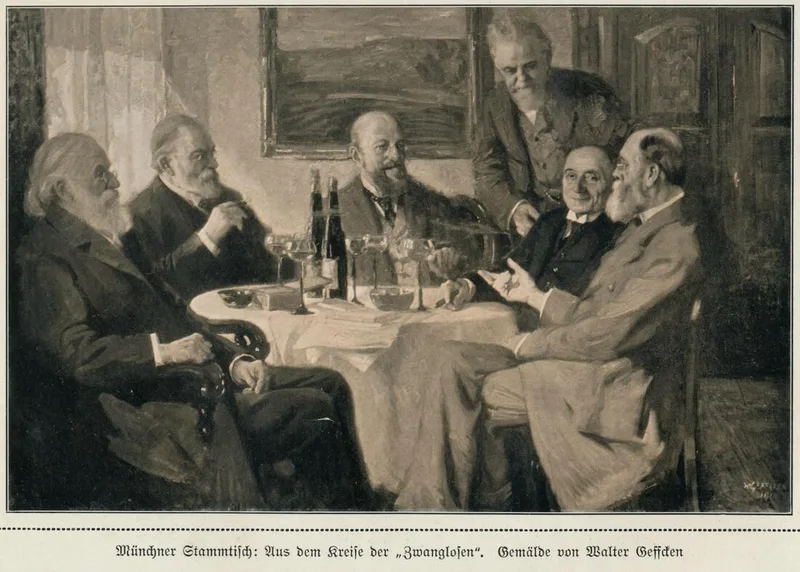
    ​I can set my watch by a neighbor of mine. Well in his eighties, he is a widowed man with a long white beard covering a John Muir-esque face. Winter or summer, he wears a wide-brimmed flattop hat. He walks slowly these days, using a cane, and every evening at the same time, presumably after dinner, he sets off down the hill. In winter, he carries a flashlight. He walks to the English style pub one block from our houses, where he meets a few men. They sit at the same corner table, and chat over beers for about two hours. My neighbor and his friends are harkening back to a German custom called “Stammtisch.” Pronounced Sh-tahm-tish. (The Germans like to mush words close together, like people on the UBahn.) This hybrid word means, quite literally, root-table, or regular’s table. 
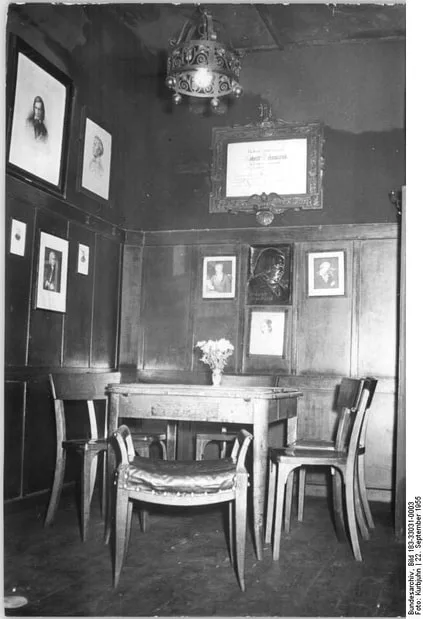
                Though it refers to the table itself, which was sometimes literally a round table with the large stump or root of a tree for a base, the idea of a Stammtisch is a regular gathering. A “Treffpunkt” (meeting place) for conversation. Originally, the table was reserved local dignitaries or politicians, to gather and play cards, or discuss philosophy, politics, or important topics of the day. If a stranger innocently wandered in and took a seat at the Stammtisch, he would be shooed away to another table. The Stammtisch was exclusive, only for men, and only those of a certain rank. There is a long tradition of the Stammtisch in Germany, some of it quite sinister. Encouraging conspiracy theories at these local gatherings played a role in the growth of fascism.

                But artistic Stammtische have also flourished, particularly in the early days of coffee’s popularity, and notably in Leipzig. Café Zimmermann in that city was host to the Collegium Musicum, a musical society founded by composer George Phillip Telemann, and many of Bach’s secular works, including the Coffee Cantata, had their debuts in that space. (An exception to the “no women in the coffee house” rule was made, so women were allowed to attend these performances.) 
    Image description
    ​       Café Zimmerman was destroyed by an air raid in ’43, but nearby still stands another of Bach’s haunts, the Coffe Baum. (The Coffee Tree.) One of the oldest coffee houses in Europe, it is just steps away from St. Thomas Church, where Bach spent most of his life and careerAnd after Bach’s time, it was the root table of two other great musicians, Clara and Robert Schumann. (The building is now a coffee museum which you can visit, and see the corner booth with dark wood paneling where the couple toasted their marriage.) Goethe, Liszt, and Mahler were but a few other luminaries who enjoyed the Coffee Tree. Along with the Schumanns and their friends, there are other famous Stammtische that are artistic, rather than political. A cadre of writers first gathered at the Algonquin Hotel for lunch to welcome Alexander Wolcott home from World War One, and continued the event which became the stuff of literary legend. More broadly, the word is often used to encourage gatherings, as when my German teacher invited her students to gather at the Junket, an authentic German deli that used to be in El Cerrito, just north of Berkeley. We would gather once a month to eat sauerkraut, drink beer, and practice our German.
                But I have also heard the word used in contemporary Germany simply to mean an individual’s regular spot. The restaurant you might drop into more or less daily for breakfast, lunch, or dinner. This is your Stammtisch. A restaurant in the Charlottenburg neighborhood of Berlin, on the corner of Pestalozzi Strasse and Krumme Strasse, was my Stammtisch. Café Feliz. Run by a husband and wife, a German woman and a Turkish man, it was often their daughter who waited on me. Like the American diner, Café Feliz was an all-purpose restaurant with a deliberately broad menu. I lived nearby, and might go for breakfast and have a “Spanische Frühstuck,” a Spanish breakfast, which was diced tomato in olive oil with herbs on toast. Or I might go for lunch and have a salad or omelet, or on a cold day a big plate of “Kartoffeln ohne Speck, bitte.” Potatoes without bacon, please. Later, I might go for dinner and have a Pizza Marguerita. And still later, close to midnight, I might pop in after attending the Deutsche Oper and have a Sambucca, handily lit on fire by the same waitress who made my morning coffee. The staff was always thin at Café Feliz, with one guy in the kitchen, helped by the husband and wife, and two waitresses, at most, for the large space which also had outside tables. It would never work in America, where people are in a hurry, and the Starbucks barista apologizes t if you have to wait thirty seconds before being asked for your order. But there it functioned perfectly. Twice a week the Platz opposite the restaurant had an open air market, and on those busy days you might wait ten minutes or more before anybody got around to you, which only helped you feel at your leisure. And while the service was excellent, it was not obsequious, which was also ideal for the Stammtisch feeling. Between mealtimes I could hog a table for hours, working on a novel. The family who ran the place would take time to chat with me during the lulls. I always felt welcome.
    ​            I am not an intrepid traveler. I travel, but I am like the swimmer who doesn’t really like swimming, who rushes from buoy to float to shore. So finding a home base in a new city is important to me. And fortunately, I have found that Stammtisch feeling can happen in an instant, even when you’re not a local, much less a regular, and even if you visit the place only once. One rainy day near Paddington Station in London, I had an hour or so to kill before my train. I wandered around narrow, unpopulated streets until I found what I didn’t know I was looking for. My place. The entrance was about twice as wide as the door, and the whole long room was wide enough only for a counter and a man behind it moving sideways like an octopus on a wall of rocks, his arms everywhere, flipping sausages, pouring coffee, buttering toast. I squeezed onto a stool between two men tucked into full plates, their elbows on the counter, their faces— to this romantic American— Dickensian. I had an almost full English breakfast, that is eggs, beans, tomatoes, toast, but no meat. And a cup of coffee that was such a generic black liquid, it might’ve been coffee or strong English tea. It was perfect. I was fairly dressed up for the place, but still got nothing more than a fleeting sideways glance, and enjoyed my food and a sense of belonging until there was nothing but the shine of grease on the plate. 
        When I’ve had more time in a place, I have cultivated a Stammtisch more deliberately. In Paris, there was a café near a bridge, quite picturesque, I went every day. One morning a photo shoot took place on the bridge, with a handsome male model seated on a vespa. Made to order with my croissant. A book café in Vilnius was dark and unpretentious. The woman behind the bar used her downtime to make tiny, hand-carved wooden earrings. I had some tomato soup from a can, and found a ragged old copy of a Sue Grafton mystery I had read before, because a book can also be a Stammtisch. 
            When travelling, a temporary Stammtisch is a restorative. Before a day of newness, which may be hit or miss, one gains confidence that once a day, or twice, you’ll know what to expect. This is only natural. It’s what philosopher George Santayana once called “the instinct for self-repetition.” And its evolutionary. If our ancestors ate the berries of a certain bush, and were nourished and did not die, it only made sense to return safely to that same bush, rather than brave a different, unknown food source. But there’s another reason for this less adventuresome choice. You become at home in a public place, and become part of the wallpaper. You begin to feel like a local, or as if you are wearing Harry Potter’s invisibility cloak. Thus ensconced, you can truly observe. My nephew is a barista and coffee roaster in Los Angeles. He is also a writer and novelist. What a genius job for him to choose. He will never want for stories, even if he must fill in some of the details about the man with the friendly dog, or the woman who is always in a rush. 
                Much of the lure of restaurant work is to be on the inside of the Stammtisch. To be a purveyor of that sought-after sense of belonging. And it’s always a thrill for the staff when a celebrity chooses the restaurant as his Stammtisch. Kurt Vonnegut used to write and drink coffee at an unassuming cafeteria-style lunch spot called Miss Brooks Restaurant at the corner of 53rd and Third Avenue in New York. As a writer, I couldn’t carry Kurt Vonnegut’s water, but working at Miss Brooks, I did pour his coffee. In my time waiting tables at Spring Street Natural, also in NYC, I waited on the comedienne Nora Dunn. Already a star on SNL, she came in during a quiet lunch shift and didn’t speak to me at all, but left me a five dollar tip on a seven dollar salad, a gesture that said, “the service was good, and I’ve been where you are.” But any regular becomes a celebrity to the staff and, in a certain way, beloved. Even the difficult ones give the crew something to talk about, to help pass the time. And the pleasant ones are nothing less than a treasure. 
    Image description
    ​            There is no style on a Stammtisch. It may be casual and cozy, or elite and glamorous. The British or Irish Pub is more or less a guaranteed Stammtisch. My sister plays fiddle, and has her regular weekly musical gathering, but is also always on the lookout for a place to join in and play. The Jam Session is a musical Stammtsich.  And I love to think about certain eras of the Stammtische, (the plural) like the Vesuvio Café in San Francisco’s North Beach, where the Beats hung out in the 50s, or in Broadway’s heyday, when Elaine’s and the Stage and Sardi’s would overflow with theatrical crowds, Al Hirschfeld at a corner table sketching his zigzagging lines. For a while, the coffee shop at the Edison Hotel on 47th Street was my Stammtisch. The Edison inspired Neil Simon’s 45 Seconds from Broadway, and was always a reliable place to spot stars and stage managers polishing off blintzes or matzoh ball soup before or after a show. 
    But the character of a Stammtisch is not always social, or even fun. Dunn only came in the one time, but there was a regular at Spring Street Natural I will never forget. She was a young woman, still in her twenties. She always came in around dusk. She sat by the window, never ordered food, and had one glass of white wine which she lingered over, staring out the window for the better part of an hour, and then paying the bill in time to leave before the dinner rush began. “Her husband died,” my friend told me one night. A small man, this waiter had a musical accent and a gentle demeanor that inspired confidences and large tips from the customers. I almost gasped when he told me. She was so young! I had so many questions. How did her husband die? Did they used to come in together? Is this a pilgrimage? How does she fill the rest of her days, and nights? I never asked any of those questions. But I did try to bring a little more friendliness to the table on those nights when I was the one to pour her wine. 
                Long, long ago, I had my first Stammtisch, though I didn’t know it at the time. Almost daily my high school friends and I would extend our lunch hour at a place on University Avenue called Au Coquelet, where we hogged a cluster of tables pushed together at the center of the room. I’m sure we felt very sophisticated, and just as sure we talked prattle, nursing our nascent coffee addictions and discovering the joys of a simple gateau Basque. 
    Perhaps my all-time favorite Stammtisch was a place in the West Village called Sandolino’s. I discovered it my first year in New York, which was coincidentally my first year of adulthood. The menu was fairly typical of a New York diner, though they had a few more items that were part of the new health food. Unlike most diners, the ceilings were two stories high, and there were many climbing plants up in the rafters. The tables were not formica, but a golden wood. Something about the decor spelled California to me, and I felt immediately at home. When a friend from Berkeley visited me at school, I took him to Sandolino’s and felt proud to show him my place. When I got a new boyfriend, Sandolino’s was one of our first stops, and also a test. If he didn’t appreciate Sandolino’s, he obviously couldn’t appreciate me. (He did come to appreciate Sandolino’s, and we later married.) Years later we lived together right behind a family-run grocery store in Berkeley, ducking in the back to pick up a loaf of bread, or a bag of onions. A grocery story can also be a Stammtisch, even without the Tisch.
             The Edison’s coffee shop is now a restaurant. Strictly fine dining, no blintzes to be had. Sandolino’s closed a long time ago, so did Spring Street Natural. Café Feliz in Berlin seems not to have survived the Pandemic. And Au Coquelet is no more. But right now, I am blessed with several nice establishments nearby. The pub my neighbor enjoys has food designed to comfort, and an occasional trivia night or musical act. There’s also a rather snazzy pizzeria, and a hole-in-the-wall bakery. Like a lot of people, the housebound reality of the pandemic made me much more aware of the importance of the Stammtisch. As a single person working mostly from home, I cherish being greeted with familiarity when I stop in for a drink or a meal, or to pick up takeout. And even on the days I don’t stop in, a friendly wave from the woman behind the bakery counter as I walk by with my dogs can lift my morning spirits. I staunchly refuse to quote the theme song from Cheers, because at a Stammtisch, it doesn’t matter if everybody knows your name or not. You are the woman with the dogs, or the man who likes extra mustard. You are that important person, a regular. And on both sides, waiter and waitee, how pleasant or unpleasant we are in these seemingly transient relationships, well, it says a lot about a person. And word gets around. The next time you see Nora Dunn on TV, you might think of that big tip she left me. And did you know that my niece once waited on Meryl Streep? And she was just lovely! 
                Though it started as a privilege for the town’s elite, the Stammtisch has also been an instrument of revolution, providing steam for the Reformation through seemingly innocuous societies like Telemann’s Collegium Musicum. Berkeley’s most famous chef, Alice Waters, encountered this revolutionary spirit the hard way when she announced she was closing César’s, a casual tapas bar next door to her famed restaurant, Chez Panisse. For twenty-four years, César’s had been enjoyed and beloved by both customer and staff, who had formed a social, commercial, and gastronomic bond so strong that it seemed an outrage that the actual owner of the property might want to do something else with the space. Signs and placards were colored in. Protests in the Berkeley tradition were held. César might’ve been Alice Water’s property, but now it had become something else. It had become a Stammtisch. 
                I wasn’t a regular at César’s, but I do have an aspiration in the Stammtisch department. My image is based on someone I used to seat when I was a hostess at an Italian fine dining spot in Newton, Massachusetts. He was a slightly rumpled man. I imagined him having a difficult job, perhaps with numbers. He used to come in once a week, never wanting a table, always taking a seat at the bar, usually the noisiest least desirable one, right by the swinging door to the kitchen. He would order the fish, and have a second glass of wine but no dessert. He was always friendly and kind to the bartender, Tim, and to anyone else who happened to occupy the seat next to him. My goal is to be that kind of weekly regular, perhaps somewhere a bit fancy. I imagine I will gift myself that experience when I decide to consider myself a successful writer, which could be any day now. I will go religiously, once a week, probably on Thursdays. I’ll sit at the bar and have a particular drink, something people can recognize, and remember. Maybe the waitstaff, behind the kitchen door, will call me “Aperol Spritz.” 
                “Aperol Spritz” is here again, they’ll say. “She looks happier this week, but she’s reading Tolstoy, isn’t that an odd combination?” That’ll give them something to talk about. 
    Picture