
A Great Christmas Movie's Gotta Have...
1. An Existential Crisis.
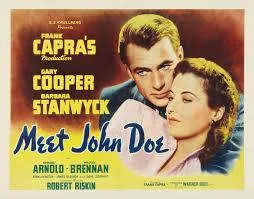
Whether it is personal, professional, or romantic, lots of great holiday movies bite off a big piece of introspection. Many plots take this as far as tackling the topic of suicide, and here I must insert a fact: The suicide rate does not go up over the holidays. That is a dangerous and commonly held misconception. Suicides, sadly, occur throughout the year. But winter can be a time for existential questions. It’s a Wonderful Life (1946) is perhaps the most famous movie example. George Bailey ponders the question of whether the world would be better without him. Suicide is also a theme in director Frank Capra’s other Christmas movie, Meet John Doe, (1941) with Barbara Stanwyck and Gary Cooper. At its core, A Christmas Carol is an existential crisis, so I’ll go on the record with my favorite version, which is the one with British actor, Alistair Sim. A Christmas Carol, (1951), released in Britain as Scrooge, it was crafted with the taut austerity of postwar British cinema. (It was filmed in a studio in Walton-on-Thames whose buildings had been requisitioned for use during the war.) There are no splashy effects here, just a great actor portraying Dickens’ greatest character.
1. An Existential Crisis.
Whether it is personal, professional, or romantic, lots of great holiday movies bite off a big piece of introspection. Many plots take this as far as tackling the topic of suicide, and here I must insert a fact: The suicide rate does not go up over the holidays. That is a dangerous and commonly held misconception. Suicides, sadly, occur throughout the year. But winter can be a time for existential questions. It’s a Wonderful Life (1946) is perhaps the most famous movie example. George Bailey ponders the question of whether the world would be better without him. Suicide is also a theme in director Frank Capra’s other Christmas movie, Meet John Doe, (1941) with Barbara Stanwyck and Gary Cooper. At its core, A Christmas Carol is an existential crisis, so I’ll go on the record with my favorite version, which is the one with British actor, Alistair Sim. A Christmas Carol, (1951), released in Britain as Scrooge, it was crafted with the taut austerity of postwar British cinema. (It was filmed in a studio in Walton-on-Thames whose buildings had been requisitioned for use during the war.) There are no splashy effects here, just a great actor portraying Dickens’ greatest character.
2. Romance
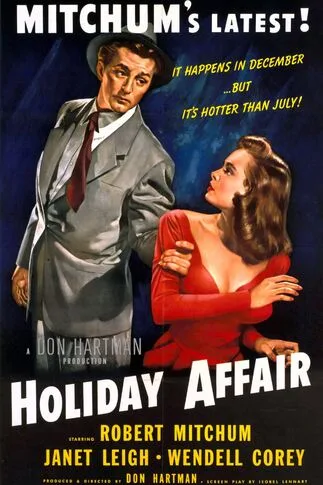
You will notice that what I consider the greatest Christmas movies were all made during and just after World War II. This is no coincidence. Hope was the greatest product manufactured on the home front, much of it in Hollywood. Even the more modern A Christmas Story deals with a young boy’s yearning for a rifle in 1940, a time when the country was summoning its courage to stand up to fascism. And many of the holiday romances have wartime themes. In Holiday Affair, (1949) with Janet Leigh, Leigh plays a widowed single mother, unable to move on from her attachment to her husband, who was killed in the war. Robert Mitchum joins her in this sexy romantic comedy with post-war depth, and a really cute kid.
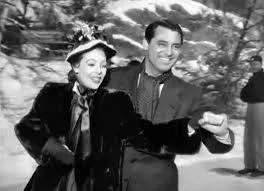
The Bishop’s Wife (1944) with Loretta Young, Carey Grant, and David Niven, remade later as The Preacher’s Wife (1996) with Whitney Houston and Denzel Washington, deals with a somewhat stale marriage brought back to life by the wife’s romantic friendship with an angel. Just like the angel Clarence in It’s a Wonderful Life, a heavenly visitor prompts introspection. The angel is a great device, because the unhappy wife gets to have a little fling, but we still have a happy ending when she stays in a loving, but imperfect marriage. (The Preacher’s Wife is a lovely movie, but I haven’t watched it since the sad shock of Whitney Houston’s death. I hope someday I can enjoy it again.)
Speaking of remakes, You’ve Got Mail (1998) is a remake of The Shop Around the Corner (1940). Both are delightful, You’ve Got Mail for the unbeatable comedic tone of writer Nora Ephron, and Shop Around the Corner for its adherence to the original Hungarian stage play. There's great chemistry between Jimmy Stuart and lesser known but wonderful actress, Margaret Sullavan. Sullavan and Stuart played summer stock together early in their careers and they have a great rapport. Their antagonistic chemistry sets us up for the denouement of having fallen in love with the last person you’d hope to fall in love with. This is a whole subgenre of romantic film which could be called “When the Wrong Person is the Right Person.” Shop was directed by Ernst Lubitsch, who brings with him the sensibilities of the Berlin theater he cut his teeth on. Though not directly war-related, the poignancy of the modest retail workers struggling to find love as they make ends meet, probably resonated with wartime audiences.
2. Romance
You will notice that what I consider the greatest Christmas movies were all made during and just after World War II. This is no coincidence. Hope was the greatest product manufactured on the home front, much of it in Hollywood. Even the more modern A Christmas Story deals with a young boy’s yearning for a rifle in 1940, a time when the country was summoning its courage to stand up to fascism. And many of the holiday romances have wartime themes. In Holiday Affair, (1949) with Janet Leigh, Leigh plays a widowed single mother, unable to move on from her attachment to her husband, who was killed in the war. Robert Mitchum joins her in this sexy romantic comedy with post-war depth, and a really cute kid.
The Bishop’s Wife (1944) with Loretta Young, Carey Grant, and David Niven, remade later as The Preacher’s Wife (1996) with Whitney Houston and Denzel Washington, deals with a somewhat stale marriage brought back to life by the wife’s romantic friendship with an angel. Just like the angel Clarence in It’s a Wonderful Life, a heavenly visitor prompts introspection. The angel is a great device, because the unhappy wife gets to have a little fling, but we still have a happy ending when she stays in a loving, but imperfect marriage. (The Preacher’s Wife is a lovely movie, but I haven’t watched it since the sad shock of Whitney Houston’s death. I hope someday I can enjoy it again.)
Speaking of remakes, You’ve Got Mail (1998) is a remake of The Shop Around the Corner (1940). Both are delightful, You’ve Got Mail for the unbeatable comedic tone of writer Nora Ephron, and Shop Around the Corner for its adherence to the original Hungarian stage play. There's great chemistry between Jimmy Stuart and lesser known but wonderful actress, Margaret Sullavan. Sullavan and Stuart played summer stock together early in their careers and they have a great rapport. Their antagonistic chemistry sets us up for the denouement of having fallen in love with the last person you’d hope to fall in love with. This is a whole subgenre of romantic film which could be called “When the Wrong Person is the Right Person.” Shop was directed by Ernst Lubitsch, who brings with him the sensibilities of the Berlin theater he cut his teeth on. Though not directly war-related, the poignancy of the modest retail workers struggling to find love as they make ends meet, probably resonated with wartime audiences.
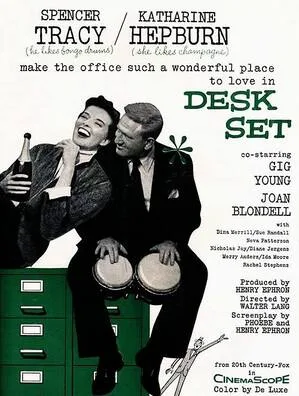
The threat of a corporate takeover plot in You’ve Got Mail has some roots in another great holiday romance, Desk Set (1957.) Katherine Hepburn and Spencer Tracy are in their eighth movie together here, and in top form. It has the customary arc of a holiday romance, with our lovers on opposite sides of a workplace conflict, but Desk Set also has an element that is often stripped out of holiday movies these days: a highly intelligent woman with a valuable professional competence. The quintessential Hallmark movie often makes the woman’s profession an obstacle. Her complex intellectual urban life is seen as at odds with the simpler, more honest rural existence. The Hallmark Industrial Complex is a topic for another time, and I admit frankly that I watch them, but the point is, the woman’s smarts are at best window dressing. With Hepburn in Deskset, the woman’s smarts are the sexiest thing about her.
Another romance with a smart-but-not-domestic female is a personal favorite of mine, Christmas in Connecticut. (1944). Barbara Stanwyck is living a successful but entirely phony life as a prototypical Martha Stewart, writing a magazine column about an idyllic life on a farm with a husband and a baby, none of which she has. The movie embraces Stanwyck’s lack of wifely attributes, and celebrates her wit and sexiness when she falls in love with a handsome war hero, Dennis Morgan. In its light hearted way, this movie foreshadows the pressure women would feel post-war to give up their wartime freedoms and settle down to traditional roles. And Miracle on 34th Street (1947) deserves a nod here as well, with Maureen O’Hara as an unapologetically competent and successful working woman.
I won’t leave the romances without including a favorite of mine from the nineties, While You Were Sleeping, (1995). Sandra Bullock plays a forlorn subway employee with no family, and only a romantic fantasy for companionship. With the object of her fantasy in a coma, Bullock is mistakenly welcomed into the bosom of his family Christmas, where she promptly falls in love with her coma-laden imaginary lover’s brother. Hilarity ensues, and the movie picks up the romantic existentialism of the season, asking the biggest relationship question, “what if I chose the wrong one?” But it also fits into the Crazy-but-happy Family genre, which leads us to our last category:
Another romance with a smart-but-not-domestic female is a personal favorite of mine, Christmas in Connecticut. (1944). Barbara Stanwyck is living a successful but entirely phony life as a prototypical Martha Stewart, writing a magazine column about an idyllic life on a farm with a husband and a baby, none of which she has. The movie embraces Stanwyck’s lack of wifely attributes, and celebrates her wit and sexiness when she falls in love with a handsome war hero, Dennis Morgan. In its light hearted way, this movie foreshadows the pressure women would feel post-war to give up their wartime freedoms and settle down to traditional roles. And Miracle on 34th Street (1947) deserves a nod here as well, with Maureen O’Hara as an unapologetically competent and successful working woman.
I won’t leave the romances without including a favorite of mine from the nineties, While You Were Sleeping, (1995). Sandra Bullock plays a forlorn subway employee with no family, and only a romantic fantasy for companionship. With the object of her fantasy in a coma, Bullock is mistakenly welcomed into the bosom of his family Christmas, where she promptly falls in love with her coma-laden imaginary lover’s brother. Hilarity ensues, and the movie picks up the romantic existentialism of the season, asking the biggest relationship question, “what if I chose the wrong one?” But it also fits into the Crazy-but-happy Family genre, which leads us to our last category:

3. Coming Home Again
Luisa May Alcott’s Little Women deals with a loving family living through the hardship of a father away at war. There are several screen versions of this holiday classic. Though I absolutely love Mary Astor as Marmee in the 1949 version, I struggle with June Allyson as Jo, and will take Katherine Hepburn as Jo in the '33 version any day. A highlight for me is when Hungarian actor Paul Lukas sings Tchaikovsky's "Nur wer die Sehnsucht kennt,” evoking the yearnings of a lonely refugee. But the film’s centerpiece is Hepburn, who captures the struggle with gender conformity brilliantly, as she would again in Sylvia Scarlett (1935).
In this family-at-home vein, you’ve also got The Man Who Came To Dinner (1942.) Though directed by William Knightly, it’s definitely Capra-esque, with a whacky household in chaos like You Can’t Take it With You, which Capra directed in ’38. (Both are based on stage plays of Kaufman and Hart.) Monty Wooly plays the unwanted houseguest with grouchy grandiosity. It’s a very different character than the sweet old gent he plays in The Bishop’s Wife. Bette Davis would’ve been a shoo-in for the glamorous movie star role, but apparently fought for the role of Wooly’s secretary, whose romance is at the heart of this ensemble piece which includes the fluttery, high-voiced comedic gifts of Billie Burke as the matriarch.
And for a family story with romance and homecoming themes, Meet Me In St. Louis (1944) gives you a full year of holidays. Mary Astor is wonderful in a maternal role here as well, and this movie has the most poignant Christmas song ever, Have Yourself a Merry Little Christmas sung by Judy Garland to comfort her little sister, Margaret O’Brien, at the prospect of moving away from their beloved St. Louis.
I’ve also got Stuart Saves His Family (1995) cued up, because Family Dysfunction and Christmas Fun are synonymous.
Luisa May Alcott’s Little Women deals with a loving family living through the hardship of a father away at war. There are several screen versions of this holiday classic. Though I absolutely love Mary Astor as Marmee in the 1949 version, I struggle with June Allyson as Jo, and will take Katherine Hepburn as Jo in the '33 version any day. A highlight for me is when Hungarian actor Paul Lukas sings Tchaikovsky's "Nur wer die Sehnsucht kennt,” evoking the yearnings of a lonely refugee. But the film’s centerpiece is Hepburn, who captures the struggle with gender conformity brilliantly, as she would again in Sylvia Scarlett (1935).
In this family-at-home vein, you’ve also got The Man Who Came To Dinner (1942.) Though directed by William Knightly, it’s definitely Capra-esque, with a whacky household in chaos like You Can’t Take it With You, which Capra directed in ’38. (Both are based on stage plays of Kaufman and Hart.) Monty Wooly plays the unwanted houseguest with grouchy grandiosity. It’s a very different character than the sweet old gent he plays in The Bishop’s Wife. Bette Davis would’ve been a shoo-in for the glamorous movie star role, but apparently fought for the role of Wooly’s secretary, whose romance is at the heart of this ensemble piece which includes the fluttery, high-voiced comedic gifts of Billie Burke as the matriarch.
And for a family story with romance and homecoming themes, Meet Me In St. Louis (1944) gives you a full year of holidays. Mary Astor is wonderful in a maternal role here as well, and this movie has the most poignant Christmas song ever, Have Yourself a Merry Little Christmas sung by Judy Garland to comfort her little sister, Margaret O’Brien, at the prospect of moving away from their beloved St. Louis.
I’ve also got Stuart Saves His Family (1995) cued up, because Family Dysfunction and Christmas Fun are synonymous.
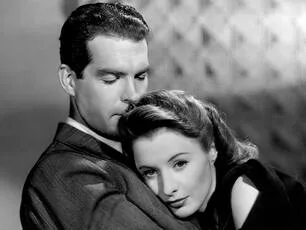
A somewhat lost gem, though less so these days thanks to Turner Classic Movies, Barbara Stanwyck and Fred MacMurray star in a movie about going home again called Remember the Night (1940). It’s gritty, and more serious than some holiday movies, and I love it. As unlikely a plot as you’ll ever find, MacMurray is a D.A. prosecuting Stanwyck for shoplifting when he ends up bringing her home for the holidays. This is a movie about poverty, generosity, and the value of chosen family. Sadly, as with many films of this era, the people of color, if present, portray servants, often with exaggerated emotions and low intelligence. These cameos are cringeworthy and truly lamentable, through no fault of the talented performers, often intended as background humor to a more serious story. In Remember the Night, MacMurray’s servant is played by Fred Toones. Known by his stage name, “Snowflake,” Toones made no fewer than two hundred movies, often uncredited. These stereotyped elements are also present in It’s a Wonderful Life, where the frisky young war hero chasing the housekeeper, Annie, around the table doesn’t seem so funny these days. It is worth stating the obvious, that because of the prejudices and discrimination of the era, these movies are the stories of mainly white people, though many of these secondary and stereotypical roles were played by stars in their own right. The role of Annie was played by Lilian Randolph who, in addition to making dozens of films, was a radio star and later appeared on various 70s TV shows.
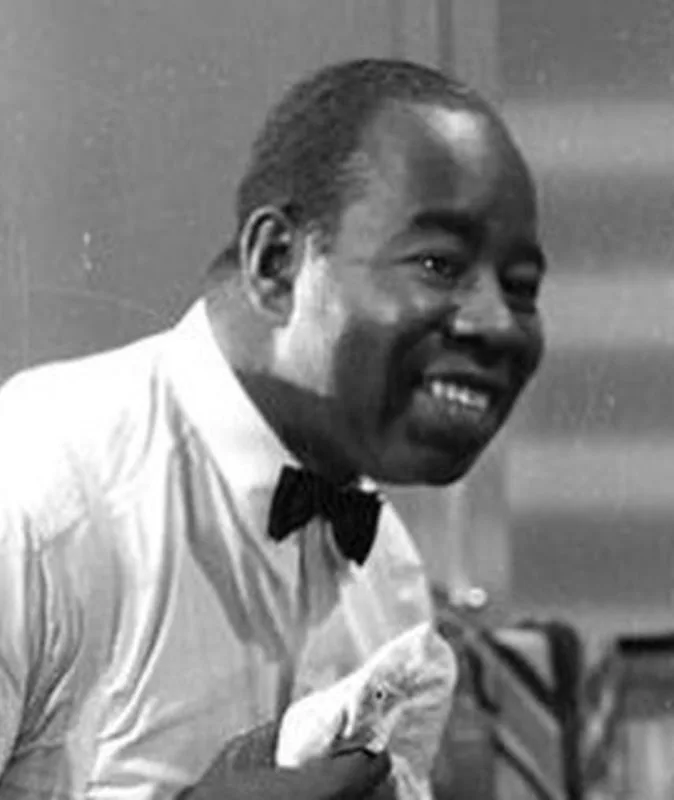
Actor Fred Toones
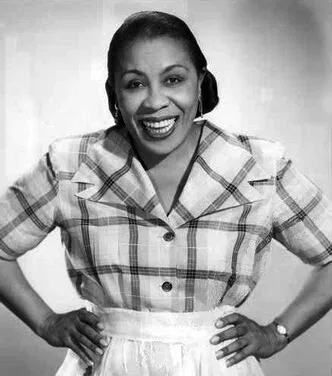
Actress Lillian Randolph
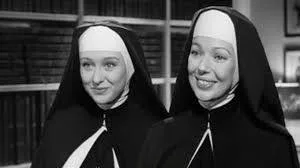
There are a slew of movies in which a going home message is overtly religious, signaling a return to faith, and belief in God. These movies have nuns and priests who are appropriately angelic. Loretta Young and Celeste Holm in Come to the Stable (1947), Bing Crosby in Going my Way (Best Picture Winner 1944) and The Bells of St. Mary’s (1945). These are pretty sugary but if I’m in the right mood, they are a treat.
White Christmas (1954) is many things. A backstage romance first and foremost, but I’d put it as a coming home story in the fundamental sense of men coming home from war. Bing Crosby and Danny Kaye play two veterans trying to help their old commander. To do so, they reassemble the whole platoon, all of whom leave home on Christmas, reminding us that home is at its essence with those you love, which here is the brotherhood of comrades in arms. The comedy of Mary Wickes, and Rosemary Clooney's crooning are highpoints for me.
So, existential crises, life-changing romances, and home and togetherness, that about covers it. But there are no rules when it comes to what comforts. I won’t go so far as to say “I never met a Christmas movie I didn’t like,” but I will watch just about anything, and am often surprised by the emotional punch a mediocre movie can pack. Midnight Clear (2006) – not to be confused with a war movie of the same name from ’92— stars Stephen Baldwin as a homeless, unemployed alcoholic. On Christmas Eve he is desperate, and about to rob a convenience store. If I were a movie critic, which I’m not, I’d call it “uneven,” but on the day I watched it, it was intensely moving and just what I needed. Yesterday I had a cozy double feature of two pretty awful Chrismas movies. Jingle all the Way (1996), starring Arnold Schwarzenegger and Sinbad, made me laugh out loud almost continuously, and in A Christmas Karen (2022). Michele Simms made me cringe and laugh and cry in a Scrooge retelling, totally unsuitable for children, but at times heartwarming.
White Christmas (1954) is many things. A backstage romance first and foremost, but I’d put it as a coming home story in the fundamental sense of men coming home from war. Bing Crosby and Danny Kaye play two veterans trying to help their old commander. To do so, they reassemble the whole platoon, all of whom leave home on Christmas, reminding us that home is at its essence with those you love, which here is the brotherhood of comrades in arms. The comedy of Mary Wickes, and Rosemary Clooney's crooning are highpoints for me.
So, existential crises, life-changing romances, and home and togetherness, that about covers it. But there are no rules when it comes to what comforts. I won’t go so far as to say “I never met a Christmas movie I didn’t like,” but I will watch just about anything, and am often surprised by the emotional punch a mediocre movie can pack. Midnight Clear (2006) – not to be confused with a war movie of the same name from ’92— stars Stephen Baldwin as a homeless, unemployed alcoholic. On Christmas Eve he is desperate, and about to rob a convenience store. If I were a movie critic, which I’m not, I’d call it “uneven,” but on the day I watched it, it was intensely moving and just what I needed. Yesterday I had a cozy double feature of two pretty awful Chrismas movies. Jingle all the Way (1996), starring Arnold Schwarzenegger and Sinbad, made me laugh out loud almost continuously, and in A Christmas Karen (2022). Michele Simms made me cringe and laugh and cry in a Scrooge retelling, totally unsuitable for children, but at times heartwarming.

But for many, the best Christmas movie may be no Christmas movie at all. Home may not be an inviting place, or it may not exist anymore. Some people are not in a relationship, and don’t hope to be. Like the alcohol and sugar that others overindulge with, for some, holiday movies can be toxic, and skipping the genre all together may be the way to go. Or you might choose something with a lighter, less sentimental approach. Two of my favorite people to spend time with at the holidays are Nick and Nora Charles. The Thin Man (1934) and After the Thin Man(1936) are set at Christmas and New Year’s respectively. Both are wise-cracking detective stories and, being made during the Great Depression, these movies have a very practical approach. Nick and Nora are madly in love but they don’t get gooey about it. In both movies, Nick and Nora are dealing with comically dysfunctional families, and they throw parties which are full of rowdy, bawdy characters. And they drink. A lot.
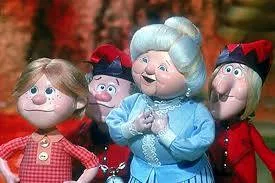
And now, batting cleanup, I’ll put in some TV picks. I was born in the golden era of Christmas TV special. Rudolf, the Grinch, Frosty, and A Charlie Brown Christmas all debuted in the first years of my life. But also from this era is the lesser-known Rankin/Bass musical The Year Without a Santa Claus (1974). It’s an hour long, motion-animated TV special, in the tradition of Rudolf, Frosty, et al. It’s a nice story, with sweet themes of course, but I love it for its main character, Mrs. Claus, voiced by the fabulous Shirley Booth. Famous to TV audiences as “Hazel,” Booth was a devoted stage actress. She made only four films, and this performance was her last before retiring. Santa is voiced by Mickey Rooney, and the other reason to watch is the songs, which include “Blue Christmas” and “Here Comes Santa Claus.” It’s great for the kids, but if you don’t have kids, you have my permission to watch it anyway. Bonus: the video of this show usually includes a short documentary on the art of motion-animation which is quite fun. (I'll include the clip of my favorite song, "I Believe in Santa Claus", below.
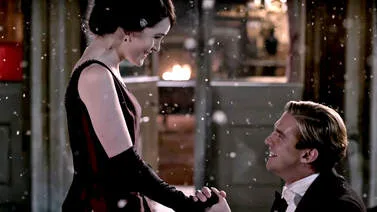
Don’t forget that many tv series have Christmas episodes, and the internet being what it is, I’m sure you can find your favorite show’s holiday episodes if you try. One of my favorite series, Monk, has several good Christmas episodes, and one other I love to watch this time of year is Downton Abbey’s Season 2 Episode 9, Christmas at Downton Abbey featuring Matthew and Mary’s romance. Here in San Francisco, you can even go see Golden Girls Live: The Christmas Episodes, which is an annual performance. The Dean Martin Christmas Special 1968 is a blast, if you can look past the sexism and booze jokes, and is available on YouTube.
And finally, speaking of YouTube, a note on how we watch. It changes from year to year, but right now you can watch The Bishop’s Wife on YouTube, and probably some of the othrs listed here. I take advantage of all the different video platforms, but I still miss the unity of the big three channels. I well remember waiting with great anticipation for the night that Rudolf or Frosty or the Grinch would be aired, and hearing the words “it’s on, it’s on!” ringing throughout the house. So, as we sit down at the Christmas Movie Table, which is groaning and heavy with streaming, cable, and rentals, let us not forget the lowliest of the video universe, broadcast. Broadcast is the Charlie Brown’s tree of TV viewing options. Here in the East Bay Area, It’s a Wonderful Life sometimes plays on Christmas Eve on the City of Richmond’s public access station. It’s a grainy old print, but knowing that others are experiencing the jingle of Clarence’s bell at exactly the same time as I am, something about that just feels like Christmas.
Don’t forget that many tv series have Christmas episodes, and the internet being what it is, I’m sure you can find your favorite show’s holiday episodes if you try. One of my favorite series, Monk, has several good Christmas episodes, and one other I love to watch this time of year is Downton Abbey’s Season 2 Episode 9, Christmas at Downton Abbey featuring Matthew and Mary’s romance. Here in San Francisco, you can even go see Golden Girls Live: The Christmas Episodes, which is an annual performance. The Dean Martin Christmas Special 1968 is a blast, if you can look past the sexism and booze jokes, and is available on YouTube.
And finally, speaking of YouTube, a note on how we watch. It changes from year to year, but right now you can watch The Bishop’s Wife on YouTube, and probably some of the othrs listed here. I take advantage of all the different video platforms, but I still miss the unity of the big three channels. I well remember waiting with great anticipation for the night that Rudolf or Frosty or the Grinch would be aired, and hearing the words “it’s on, it’s on!” ringing throughout the house. So, as we sit down at the Christmas Movie Table, which is groaning and heavy with streaming, cable, and rentals, let us not forget the lowliest of the video universe, broadcast. Broadcast is the Charlie Brown’s tree of TV viewing options. Here in the East Bay Area, It’s a Wonderful Life sometimes plays on Christmas Eve on the City of Richmond’s public access station. It’s a grainy old print, but knowing that others are experiencing the jingle of Clarence’s bell at exactly the same time as I am, something about that just feels like Christmas.
Wishing you and all those dear to you
the happiest of holidays!
Love, Lisa
the happiest of holidays!
Love, Lisa