• Published on

    Aria Study: Menotti's All That Gold

    Image description
    ​(This article is mainly a roadmap for singers wishing to perform the aria, or for anyone interested in opera.)

    Should an aria from an opera written for television be performed in a way consistent with that medium, even if transported from screen to stage? Amahl and the Night Visitors, written and first broadcast in 1951, is the first ever opera commissioned for television and runs an appropriate 46 minutes. But composer Gian Carlo Menotti said he didn’t consider television at all. “All my operas are originally conceived for an ideal stage,” Menotti said, “which has no equivalent in reality.” But in the case of this aria, it doesn’t hurt to think small screen. Television is an intimate medium. Also, at this particular moment in the opera, all the other characters are asleep. The character of Amahl’s Mother is the only one awake, and we are let into her most intimate thoughts. It is a secret shared between character and audience.
             Mostly done at Christmas time, Amahl is a poignant tale for many reasons, but perhaps its most powerful essence is distilled in this moment of the Mother’s aria. The plot involves three Kings traveling to bring great gifts to a Messiah. (In the Italian Christmas tradition, “Three Kings Day” is celebrated on the Epiphany, twelve days after Christmas.) In a modest home, a poor woman cares for her child, Amahl, a bright, imaginative boy who is unable to walk without the use of his shepherd’s staff. (Think Tiny Tim goes East.) The aria asks many important questions about wealth, but it is not a merely philosophical exercise. Over the course of the aria, the Mother, through asking these questions, convinces herself that she has the right to steal some of the travelers’ gold for her the benefit of her child. 
             The aria begins with the mother’s insomnia. As Stanislavsky taught, to play a murderer convincingly, one need only to have killed a mosquito. To understand the Mother’s plight, you need only have been kept awake by one unshakable thought, obsession, or addiction. To further appreciate the Mother’s difficulty, it is important to understand what it means to live in the grip of rural poverty. The totality of it. The isolation. How often does the woman see anyone other than poor villagers like herself, subsisting in the remote desert? Perhaps she, like all of us, has thought “what if?” What if she had been born a princess? What if her son could walk? What if she were not poor?” But in such a hard scrabble life, this woman is tired, and such thoughts require energy, and probably would only take her down deeper, into an even darker place. In some situations, hope is but a tease. No, this woman is not a dreamer. She leaves the land of make believe to her son. She never imagined such a moment would befall her, but it has. She has never had two coins to rub together, and suddenly there it is. “All that gold.” It must be a mesmerizing sight to her.
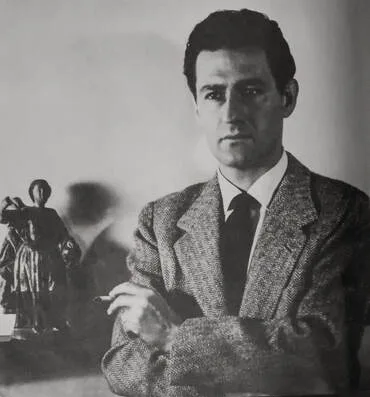
    Image description
    ​         Edna Garabedian, a mezzo-soprano who worked closely with Menotti and once directed me, said that Menotti could take two hours to direct two measures of music. He was that specific. Staging-wise, you can’t move around much. Someone would wake up. Again to method acting, this is like the exercise of a “private moment.” You must learn to behave exactly as if you would in private. As if there is no audience. Dynamically, the aria begins and ends quietly. It is worth saying twice, it is an intimate piece.
            Whatever you do, pick a specific point of focus for that gold. That pile of gold that is keeping you awake. See it clearly, down left, or down right, or center, but don’t let it migrate. 
           Menotti has written it low, escalating the pitch during what is a fevered dream of sorts, and then returning to the lower range to be quiet at the end, the way a dream sequence might be directed onstage, starting and ending in reality, but traveling in the imagination. Once you have established the privacy, you can fully inhabit the dream dynamically, but don’t do too much too soon, or you won’t take us with you. 
             So we begin: All that gold…All that gold…
             The gold must pull you in. It must be strong desire. If you’re not feeling it, use a substitution. What do you want so badly you might do something terrible to get it? It is this desire that keeps her awake. The gold is calling to her.
             The first question: “I wonder if rich people know what to do with their gold.” 
    We could spend a thousand words on this timeless paradox. Staying in the Christmas spirit, in Frank Capra’s It’s a Wonderful Life, a man shouts down at the young lovers, Jimmy Stewart and Donna Reed, “Youth is wasted on the wrong people!” Wealth is often wasted on the rich. And the idea of the undeserving rich is as fresh today as ever. The Mother’s subtext here: The rich don’tknow the value. It is her first justification. 
             Before we go on, let’s talk about that gold. Specifically, let’s talk about the “G” in the word gold. Guh, guh, guh, a guttural sound that pulls the tongue into the back of the mouth. Not ideal for singing, right? So take care not to let the tongue get stuck there. And also, you sing the word like, a thousand times, and there’s a pile of gold right there onstage with you. Once that is established, the audience will do the work for you and hear the word gold, so you can get away with thinking of that “g” as more like a quick “c.” All that cold. All that cold. And really, make that “l” nice and quick as well, and no need to overdo the “d,” but if the “l” gets lost and the “d” gets a little breathy, you end up with all that “coat,” so don’t go too far. But especially as you go up and up and up, leave some of the “guh” behind.
             Speaking of range, is this an aria for mezzo or soprano? Menotti wrote the piece for mezzo-soprano Rosemary Kuhlmann, more on her in a bit, but the score reads simply, “soprano.” It is often done by both, and there are traps for each. The “high” note is not that high, I don’t have the score with me, but I think it’s a G, or no, A flat? Either one makes it suitable for dramatic soprano, mezzo, or even contralto. But for sopranos, the bulk of the piece lies in the lower register, and climbs upward, but then goes down again, so take care not to sing too heavily in the middle range, which will weaken the high note, nor to overdo the high note, which will cost you some of the bottom resonance you have to go back to. That was singer’s-speak for keep the voice balanced, but I hope it made sense. For mezzos, the caution would be more a matter of ego. A desire to show off too much of the rich creamy lower and middle range could cause you to be too sing-y, and ruin the mood, and as it is essentially a mood piece, not that tough to sing, you might sing it very well, but wouldn’t sell it if you over-sing. This is also one of those cases, as with Ulrica, that the quality of the high note is not really the point. Don’t tell your voice teacher I said so, but if the top not is a little shrieky, I don’t mind. The woman is desperate. And one musical note, consider the “all that” a two-noted appoggiatura. All that gold. You are constantly leaning in to the word “gold.” There is tremendous opportunity for accent and nuance with language throughout that can make or break the piece. Every word has a weight, a relative balance, with “gold” always having the most, well, value.
             Back to the question about rich people and their gold. There is a whole subset of questions to this. She sings: do they know that a house can be kept warm all day with burning logs? (Do they know?) Do they know how to roast sweet corn on the fire?...Do they know how to milk a clover fed goat? And a whole bunch of other things you have to get in the right order. Memorizing is fun! Picture each situation clearly, and always in order, a child can be fed, a house kept warm, sweet corn on the fire, a courtyard with doves, a clover fed goat, hot wine on cold winter nights. Again and again and again, which will only help the obsessiveness. And the “do they know?” interjected between each question shows the woman’s urgency. Is she asking God? Can he hear her? Will anyone answer?
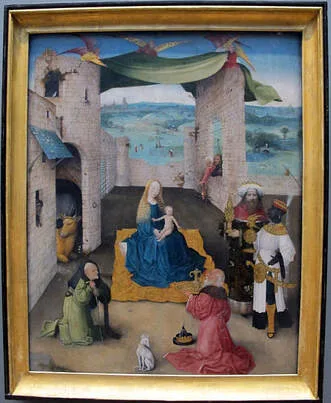
    Image description
                It is a rhetorical question. Rich people have servants to put logs on the fire, and to spice the wine, so no, they don’t know. So the question behind the question here is, why did God give all the gold to the rich people, instead of to me and my needy son? We’ll get to that question a bit later.
             First, after the logs and the corn and the doves, the Mother returns to the lure of the gold, her obsession. It is a psychological leitmotif. All that gold. All that gold. Stronger every time she returns to it. (Some people say there are a lot of repetitions in Mozart, others say there are none, because you should never sing something the same way twice.)
             And now to the heart of the matter: “Oh, what I could do for my child with that gold!”
             And then another question. (Even with the rhetorical questions, make sure you really ask. She needs to go through these motions to justify stealing the gold. She has to put up a good fight within herself.) Now she asks, “Why should it all go to a child they don’t even know?” And quickly thereafter she observes, “they are asleep.” (Where onstage are they? Place them from the start, and to make things clear, put them on the opposite side from the gold. Gold downstage left, perhaps, people upstage right.) 
    So, they are asleep. Now the final question, and really ask it, “Do I dare?”
             And the final rationalization, she’s gaining courage, steeling herself for the act. “If I take some, they’ll never miss it.” 
             “For my child,” she repeats several times, reminding herself of the purity of her motive. And here you must include one gesture, the reaching out of your hand so that someone can grab your wrist and cry “thief” when the aria ends. 
             But as for all those “for my child”s, I wouldn’t do any acting here at all. The relationship to the lyric and the meter is not exactly what you might think, and you need to count. “For my child,” -count beats- “for my child,” -count more beats- etc. The counting will give your face all the focus and concentration it needs. And you needn’t much voice. The fevered dream is over and you must ground us again in this intimate, made-for-TV moment. The others are asleep, you must now take action, for your child. 
           Menotti, like  other great composers, leaves a lot of clues in the music, text, and situation,
    . and I hope my thoughts are consistent with his intentions, but as  always, these thoughts are offered only as food for thought, and to get your own creative juices flowing. Opera is art, not science,  so take what you like here, and leave the rest.  Your interpretation will be yours to discover.

    Some History about the Opera and the Singer:
     
          This opera came on the heels of Menotti’s The Consul, which ran on Broadway and won the Pulitzer the year before. It was commissioned by NBC in 1951. Way back in ’39, NBC also commissioned Menotti for the first opera written for radio, which was to be The Old Maid and the Thief. 
         Imagine the excitement mounting for this first-ever TV opera, especially as Menotti, a notorious procrastinator, delayed and delayed. Fortunately, his procrastinations took him to the Metropolitan Museum of art, where reportedly he saw Hieronymous Bosch’s painting The Adoration of the Magi, and got inspired. The performance was given on Christmas Eve, with the NBC Symphony’s conductor, Arturo Toscanini, at the podium. 
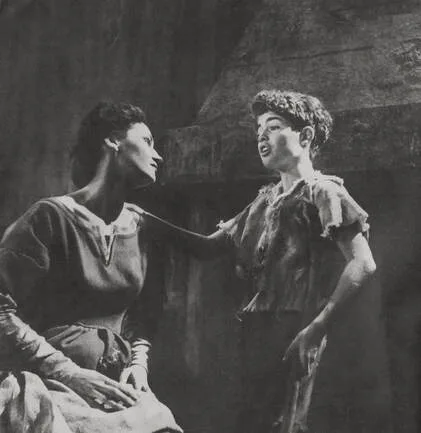
            The role of the Mother was originated by mezzo-soprano Rosemary Kuhlmann. A native New Yorker, Kuhlmann was 29 at the time of the first broadcast. Born in 1922, she was just in her early twenties during WWII when she joined the WAVES, studied Morse code, and sent secret messages. After the war, she went to Juilliard as part of the GI bill. Not much of a fan of opera, she was singing with the Robert Shaw Chorale when an audition to take over the role of the Secretary in the Broadway production of The Consul came up. She got the role, and later auditioned for Menotti for the role in Amahl.   For the audition she sang Voi lo Sapete, the mother’s aria from Cavalleria Rusticana, it is a dramatic aria that builds from the bottom, similarly to All That Gold. According to Kuhlmann, Menotti said, “you’re a little young, but we’ll make you look like a biblical woman."
    ​          Later, he called to ask her, “what’s your good high note?” To which she replied, an A, which he made the high note for the Mother’s quartet with the kings. After Amahl she had other operatic successes, notably taking on the major role of Magda Sorel in the Consul, singing with New York City Opera, and continuing to play the Mother in the annual televised performances of Amahl for a decade or so. She retired to raise a family, and later worked as an executive assistant to a VP at Pepsi. 
             Rosemary Kuhlmann died in 2019 at the age of 97. Because of her service in the war, she was buried with military honors. Among her cherished memories must have been the moment after the broadcast in ’51, when she walked into Rockefeller Center’s iconic supper club, the Rainbow Room, and received a standing ovation.
    ​See Rosemary Kuhlman in the Original Staging of the Aria Below
  • Published on

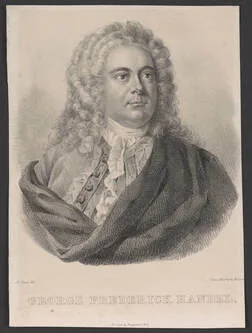
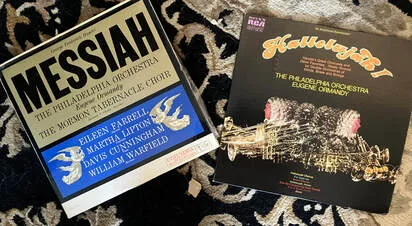
    Gentlemen, Leave Your Swords at Home!                                  Five Fun (and not so fun) Facts About Handel’s Messiah

    Image description
    1. Handel’s Messiah is the only piece of classical music that is routinely turned over to the audience. 
         The history of the Sing-along Messiah, also known as a “Scratch Messiah” and a “Messiah Sing,” is a bit difficult to pin down. Since its premier in April, yes April, in 1742, productions of the English language oratorio for soloists, chorus, and orchestra have taken all shapes and sizes. The Great Handel Festival of 1857 sported a chorus of thousands. (725 sopranos, 719 altos, 659 tenors, and 662 basses.) Held at the Crystal Palace, an enormous cast iron and plate glass structure with an organ of more than 4,000 pipes, it’s a wonder none of the glass shattered from the high notes. I do question whether the nearly four thousand Handel Festival singers were all “professionals” by a verifiable standard. As a business proposition, maybe some were paid in beer, so perhaps that should be counted as the first sing-along. In the States, the singalong seems to have gotten going in earnest in the 1960s. Named like the popular protest “Sit Ins” of the day, the National Chorale claims its Messiah “Sing-in” is the longest running in the country. Now in its 56th year, they will perform this year at Lincoln Center’s newly restored David Geffen Hall. 
    2. Some of the text of Handel’s masterwork is antisemitism at its most pure and unapologetic. 
         We love the uplifting message of Messiah. Humanity shall be saved! But what do we need saving from? You guessed it, the Jews. The scholarship of Michael Marissen, author of Tainted Glory in Handel’s Messiah, leaves little room for doubt that the libretto, adapted by Charles Jennens from biblical passages, is intended as a call to action, that so-called heathen nations must be vanquished. Another author on the subject, Robert J. Elisberg, imagines librettist Jennens in hell, enduring a frustrated eternity because his alarmist message has morphed in to a yearly, all-inclusive love-fest. 
         As a Messiah veteran and a Jewish singer who has sung professionally in churches from Catholic to Christian Science, I know from personal experience that one must always take religious lyrics with a healthy grain of kosher salt. You have to do some substitution to sing “How Beautiful are the Feet?” convincingly. But there’s really no question that the glorious unity of old was at the expense of the perceived villainous Hebrew race. A poignant fact for today, though it cannot, as with Wagner’s personal and thematic antisemitism, nullify the power of the music. (Thank heaven for small mercies.) But yes, as satirical songster Tom Lehrer might have put it: Fa la la la la, “and everybody hates the Jews.”
         If you find this line of inquiry distressing you are not alone. After finishing his book, Marissen said he needed to take a break from religious topics, and would begin work on a general reader’s introduction to Bach. And if you are still upset, I can’t do better than to quote the title of Elisberg’s article: You Can’t Handel the Truth.

    Image description
    3. Contralto Susanna Cibber’s story is one of redemption and greatness. 
         The sister of composer Thomas Arne, Cibber was admired by Handel and others for a rich and agile voice, but in 1741 she was in the throes of a PR problem. Having left an abusive husband to have children with another man, her husband sued. But as the husband in question seems to have only been after his wife’s money (a story sadly repeated in the lives of many great singers across history) sympathy for the “wronged” man was limited. Handel’s casting of Cibber as alto soloist for the premier performance of Messiah, which took place in Dublin, seemed to secure her redemption. The poignance of her singing in the great lament, He Was Despised, is said to have moved the chancellor of St. Patrick’s cathedral to declare all Cibber’s sins forgiven. The English theater owes Handel a great debt for bringing Cibber back into the fold. After Messiah, Cibber returned to London, where she became one of the greatest tragedians of the day, gracing the Drury Lane boards as leading lady opposite David Garrick. 
    Image description
    4. The Messiah premier marked a turning point for the better in Handel’s troubled career. 
         In 1741, Handel was having a tough time of it. Treading water if not drowning in debt, he was also recovering from a stroke, and his operas were failing to meet the changing tastes of London audiences. He took the text provided by Charles Jennens, and holed himself up for twenty-four days and wrote Messiah. Hoping for a change of luck, he welcomed an invitation from the Lord Lieutenant of Ireland to perform a series of concerts in Dublin. Messiah was an add-on, squeezed in between those other concerts. As rehearsals opened to the public, interest grew. Perhaps because there was not much going on the Dublin stage during Lent, and perhaps because many wanted to get a look at the notorious Susanna Cibber, a large crowd was anticipated. To make room for the crowds, women were asked not to wear their hoop skirts, and the gentlemen were asked to leave their swords at home. The space, with capacity for 600, squeezed in 700 Dubliners. 
         Despite his own travails, or perhaps because of them, Handel cared deeply about those living in poor health and poverty, and the performance was held to benefit three charities. The prison debtor’s relief, a hospital, and an infirmary. Many were thrilled by Messiah’s success, but perhaps none more so than the 142 men freed from debtor’s prison by the proceeds. A repeat performance in June was offered for Handel’s benefit, and as a farewell to the composer before his final return to London. When he died, Handel left what had by then become a great fortune to charity.
         Since 1992, every April 13th on Dublin’s Fishamble Street, an open air performance of Messiah takes place to commemorate the premier of this great work, and the city’s place in musical history. 
    Image description
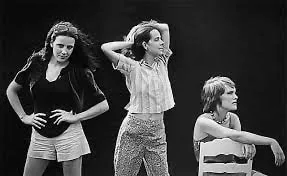
    5. People of a certain age learned Messiah’s Hallelujah Chorus from a trio of sisters called the Roches. 
         Their eponymous album was played incessantly in our household, with wonderful tunes delivered in steely-voiced three-part harmony. The sisters’ rendition of Hallelujah Chorus made a smash on Saturday Night Live in 1979. There have been many exquisite versions of this chorus, and there are many more to come, but to this author none could better the taut, sincere, and utterly musical rendition of those three women. One of its most distinctive features is the tune up, three notes sung on “ah” as the sisters adjust their harmony. 
         A Handelian anecdote: one day many years ago, my then-husband and I happened to be in North Hampton, Massachusetts, (also the home of a long-running Messiah Sing.) We were walking down the main street past a small nightclub in the middle of the afternoon when we heard those unmistakable three notes ring out. “Ah!” “Ah!” “Ah!” It was like a divine visitation, a moment of musical history stepping out of time and falling upon our ears through the open door of the small venue. We stopped and looked at the poster advertising the act performing that night. Yes. We’d just heard the Roches doing their sound check. 
     
    I’ve been soloist for a few Messiahs in my day and it is an odd experience, but delightful, when the audience suddenly stands up and joins in. In one local Messiah I did, at Unitarian Universalist Church of Berkeley, we all wore period costume, with Conductor Brian Baker looking quite a lot like Mozart in his white wig and satin britches. Like choruses around the country, UUCB’s Messiah Sing will be held this year. 
    The tradition goes on. 
     
    Some links for those with further interest:
     
    My interview with conductor and Handel expert Jeffrey Thomas Here.
     
    The Roches sing Hallelujah on SNL Here.
     
    A wonderful five-minute documentary on the scandalous contralto Here.


  • Published on

    Little Books, Big Wisdom

    Image description
    In 1989 I was working at a bookstore in San Francisco when a slim volume of homespun philosophy hit the shelves. All I Really Need to Know I Learned in Kindergarten by Robert Fulghum jumped rather than climbed onto the best seller list, where it remained for more than a year. The collection of brief essays suggested that we would all be better off if we remembered the lessons of childhood: share everything, don’t hit, clean up your mess. And every day be sure to sing, dance, paint something, and take a nap. 
             At the time I had no use for that book, nor anything like it. The ordinary did not interest me. I felt myself on the verge of an extraordinary life. But the popularity of the book provided diversion to the bookstore staff. Perched on a walled platform in the center of the store, we quite literally looked down upon the well-dressed visitors who came in to browse before the opera, and the locals who came in search of the latest thriller or literary prize winner. Every bookseller knows the feeling of trying to help a person who knows exactly the book they want, they just don’t happen to know the title, or the author. In those pre-digital days, we flipped through slippery pages and scanned the lilliputian typeface of an enormous volume called simply, Books in Print, to try and help them find what they wanted. For an entire year people came in asking for Fulghum’s book. The problem was the name. People couldn’t get it right. “There’s a book about kindergarten,” they’d say. Or, “I’m looking for a book called, ‘Everything I Really Want I Already Had But Didn’t Know It.’” And we would try not to laugh, until one day we completely lost it when a woman came in and demanded a copy of that popular book, “you know, the one about the first grade!” 
           Fortunately, my disdain for little books of wisdom like Fulghum’s did not survive. At various times since, I have fallen in love with many books one might loosely categorize as Spiritual Self-Help. The Four Agreements. The Seven Laws of Spiritual Success. Authors like Wayne Dyer and Eckhart Tolle. When I divorced, a little book called How to Survive the Loss of a Love offered granular advice on self-care that got me through some very tough days. But for a time I still resisted the mother-of-them-all. Chicken Soup for the Soul. I had read something about a shady marketing plan that moved the book to best seller status, and I decided (without reading a word of the book) that it was not for me. 
           Then I decided to move to Berlin. My brother came to bid me goodbye at the airport and gave me a tattered copy of, you guessed it, Chicken Soup for the Soul. I took it with me. Not to read, but as a symbol of my brother’s love. About six months later, the moment came. I don’t remember what happened that day. Another audition, another rejection, perhaps. An unwelcome longing for the boyfriend I’d left behind. I don’t know. But something inspired me to pick up that book. I sat on the floor under ceiling-high windows, the half-hearted Berlin winter sunlight falling on the page as I read story after story, tears streaming down my face. 
         I loved it. And I’m not alone. The Chicken Soup franchise is thriving. Thanks to my sister, I now have a copy of Chicken Soup for the Sister’s Soul. And those who know me will not be surprised to learn I also own Chicken Soup for the Dog Lover’s Soul. They may be the airplane reading of the spiritual liturgy, but 
    I have come to cherish the kind of books I once dismissed, and  I will always make room for them on my bookshelf.
           The year Fulghum’s book came out, cable news was taking root. CNN’s coverage of the fall of the Berlin Wall ushered in the 24/7 News cycle, and the digital information superhighway that would change our lives forever was being constructed. In Kindergarten, Fulghum compares the feeling of consuming too much “high-content information,” to the shuttering of his old car’s engine after being given a high octane fuel. He said it gave him the “existential willies.” 
          These days, many of us have the existential willies. We read, watch, and scroll a lot. We are less in danger of being uniformed than we are of losing ourselves in chaos and misinformation. 
          Jack Kornfield, the author of another gem of a book, After the Ecstasy, the Laundry, used to give a talk every Monday night at a meditation center in West Marin. Many Mondays I made the drive to hear him. Though his talks were profound, and for me often revelatory, he usually began by reminding the hundred or so of us who had gathered, that he wasn’t going to tell us anything we didn’t already know. His talks, like Fulghum’s book and the Chicken Soup stories, are not diatribes. They are gentle reminders. They bring us back to ourselves, sometimes after a long, unconscious hiatus. When we hear their words, we pause. We feel seen, because for a moment, in the midst of life, we see ourselves.
          Those moments can last a lifetime. My parents, who are almost ninety, still talk about a book from the 50’s called, The Lonely Crowd. It helped them to frame and understand their experiences coming of age in mid-century America. From Montaigne to The Subtle Art of Not Giving a F*ck, books and blogs on how to live a better life come and go. Some are remembered, some forgotten. But for someone, somewhere, they provided the right idea, in the right way, at just the right time. 
    Picture
  • Published on

    My Earthquake Memory: Snapshot of an Era

    Image description
    ​At 5:04 p.m. on October 17th, 1989, I was at work, standing in the center of a bookstore called A Clean Well-Lighted Place for Books. The name was a quote from Hemingway, but that didn’t stop customers from correcting the grammar almost daily. “It should be a clean well litplace for books,” they would say with a disapproving smirk as I rang up their purchases at the cash register. Six years before Amazon began its selling books online, and well before internet omnipresence, being a bookstore clerk made me a kind of semi-deity. Someone who could open the gi-normous tomb ofBooks in Printand leaf through its onion skin pages to obtain information on a precious, hard to find volume. I loved that job. My coworkers were smart and funny, but with a veneer of cynicism that was only a pose, overlain atop a sweet vulnerability. Or perhaps I only saw it that way. I was a newlywed. Late that August I’d said my vows. I was also a budding opera singer working a stone’s throw from the greatest opera house in the world. I’d say I was rather aglow with love in all directions. 
    Image description
    ​When the quake came our customers did something astounding. They ran out of the store, straight into the traffic of Van Ness Avenue. Cars came skidding to a stop and people jumped back onto the sidewalk in relief and embarrassment. Perhaps they didn’t know that we stood on bedrock, a pretty good place to be at a time of seismic catastrophe. And they probably did not know that the owners of the store, in their infinite wisdom, had built all the shelves at a slight declining angle into the wall. When the shaking stopped, not a single book had fallen.
                
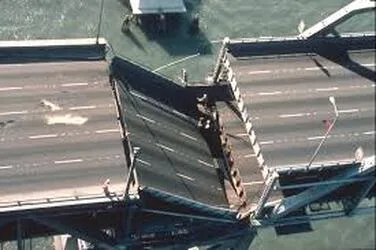
    I don’t remember if we closed or if I finished out my shift, but about an hour after the quake I headed home, walking along Van Ness in the growing dusk. This was the days before cell phones, and the chatter among people was constant, and rife with rumors and hubbub. The bridge collapsedwas something I heard and discounted. It was not possible, or so I thought. A few blocks west, a man with a shopping cart full of his possessions had a transistor radio, and a couple of people were huddled around it, listening to the news. A man in an expensive suit. A woman with a small child. I joined them. We listened together for some time. KGO, as always, was the voice of reason, calm, and solid information. Yes, in fact, part of the bridge had fallen. It was a strange, but quite beautiful moment of community, the cluster of us.
                
    I stepped away and continued up Van Ness. It was now almost dark, but many of the lights were out so it was darker than San Francisco usually is at that hour. The adrenalin began to be reabsorbed into my body as I walked faster. My brow furrowed against the strangely warm air as I began to realize this was much more than a hiccup. My ignorance swept over me. My husband was at a baseball game. The World Series. He, my brother, and my brother-in-law were all there. They’d been thrilled to go, even though the seats were fairly high up in the stands. I pictured the rough old concrete of Candlestick Park which seemed to wobble even in a stiff wind. Would it survive? 

    The rest of my walk was a worried blur. I arrived home at our apartment on Clay Street between Larkin and Hyde. I went straight in and found our cat, Boomer, scared out of his wits, but just fine. A bookshelf had emptied but the apartment looked fine otherwise. I called my sister in the east bay. She was seven months pregnant, and fine. Mom was fine. Dad was fine. Everybody was fine. She and I speculated about what our husbands would do. She said news was coming in of traffic ground to a halt because of a collapse of the Nimitz freeway. The casualties would turn out to be in the dozens. I thought, I hoped, my husband, brother, and brother-in-law would make their way to me, but how would they get here? Were the busses running? I grabbed a pack of cigarettes – yes, opera singers smoke sometimes, especially when there are earthquakes – and headed down to the street, where I smoked and chatted with my neighbors.
                
    After several hours my husband arrived home. I will never forget the look on my brother-in-law’s face before I had the chance to tell him that my sister, his wife, was fine. It is the only time I have ever seen him scared. 
                
    I tried to convince my brother and brother-in-law to stay with us. The world seemed a scary place and I was glad to have them back in my circle. But they decided to make their way across the Bay.
    Image description
    The power was out in our little apartment, and would stay out for days due to damaged substations. That part of San Francisco is just at the bottom of the ritzy Nob Hill, but truly it is closer to the Tenderloin, which is why it is jokingly called “the Tender Nob.” Feathers were ruffled over the coming days as power went back on in the wealthier neighborhoods first, but we waited, and waited. The Tenderloin’s power came on last. 
    Eventually I went back to work. Those days I had the duty of ordering the books for opera and music section, an honor I abused terribly, ordering every book I was interested in until finally they took the assignment from me. That era was a pinnacle of glory for the opera. The season before I had heard La Bohème with none other than Luciano Pavarotti and Mirella Freni, a performance so convincing and impeccable it caused me never again to lament casting grand sized opera singers in the role of young lovers. A month before the quake I had seen the great Jessye Norman in recital, and the season had opened with a sexy, smashing Luluand Sam Ramey at the peak of his voice as Mefistofeles. In general the San Francisco Opera in late eighties offered a series of performances I feel proud and lucky to have beheld, very often grabbing a sandwich after work at the bookstore, and spending the evening leaning on the rail behind the orchestra section flanked by my fellow standees. 

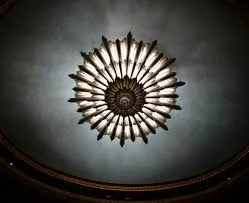
    The performance scheduled for the night of the Quake was cancelled. Subsequent performances took place at the Masonic Auditorium and later the Civic Center as a substantial repairs and seismic retrofit were performed on the War Memorial Opera House, a place many in the city and music-loving community of the Bay Area consider almost a person, at least a friend. But opera fans put up with the inconvenice, and the cavernous acoustics elsewhere. Even later, back at the opera house, most of us took a moment before the curtain rose to look up at the tight meshed net that seemed to defy the gravity of the crumbled ceiling. But like the city in 1906, San Francisco Opera showed itself to be the comeback King. 

    The actual tragedies touched me only peripherally. When I went to my Italian lesson the day after the Quake, my teacher was in tears. His friend had been one of those who died in the Marina, a neighborhood built on landfill that had fared quite poorly. A good friend from high school had exited the Nimitz freeway less than a minute before it collapsed. But the worst had been spared to those closest to me and I felt that mixture of relief and guilt common to all survivors. 
                
    Two years later, when a firestorm engulfed the Oakland Hills, I was living on the East Coast. At first I paid small attention to the news of “a fire in California.” It’s a big state, it could’ve been anywhere. Then I realized it was directly above my parents’ home and I watched the news in horror. In the end, my parents’ home was just below the evacuation line, and though my brother had hosed down the roof and they had stood and watched the hillside burn, they were safe, as was the grand lady of the Claremont Hotel, a landmark most of us East Bay natives consider iconic.
                
    Since then, disaster has become more common, and more personal. Two years ago, in the weeks following fires here, we suffered a noxious and oppressive air quality for days, and shortly following that my cousin, young, healthy, and in his early forties, died suddenly of a heart problem. He was not technically a victim of the fire, but in my mind the events are forever linked. And I have two friends who lost everything to fire, or rather almost everything. They left with the clothes on their back, and their dogs. Their strength in the aftermath has amazed me. I don’t pity them, because I have seen them triumph.
                
    The months following the Quake, the book Fifteen Seconds positively flew off the shelf in the bookstore. A hastily published paperback coffee table book, it encapsulated the worst events of the Quake, and it was one of those times in the bookstore trade that one book absolutely took over a section of the industry. When that book came out, I’d say all of San Francisco wanted a copy. And I can understand why. The mind needs help after an event like that. It seems almost unreal. Looking at those pictures, of fallen buildings, of people gathered, it lets you know, yes, this happened. But unlike the scrolling infinity of misery we all see every day on our phones, that book was finite. A frightening, tragic encapsulation that you could pick up when you needed to consider what had happened, but was also comforting because you could finish it, and put it down.
                
    CNN was founded in 1980, so it was up and running for the evens of ’89, and ’91. But the world’s population had not yet jumped aboard the 24/7 news cycle, nor did we all have cell phones, creating our own, more intimate version of 24/7. So there was a way in which these catastrophes trickled in, just as I waited in the darkened apartment for news of my husband, families waited, communities waited, cities waited. And it was in that window of not knowing that barriers came down. The number of homeless individuals in San Francisco has reached huge proportions lately, but it is far from a new problem. And people interact with each other in different ways about that. Some stop, to offer solace, or money. And sometimes a person asks for money. But when was the last time you stopped a homeless person to ask for a favor? In that moment on Van Ness, the man with the shopping cart was our lifeline for a few moments, and in those few moments our “status”, if you will, was reversed. That, I think, is the great gift of these catastrophes. Things that are artificial, or unimportant, disappear. 

    ​My family is different now, since we lost our cousin. And even these larger catastrophic events, (among which many of my friends and family include a frightening and tyrannical presidency,) these things have the ability to shake us out of our routines, to make us feel an existential human fear, not only for ourselves, but for our loved ones. I will never forget that look on my brother-in-law’s face. At least I hope I never will. Because it reminds me of the truth: we are all of us hanging by the thinnest of threads. Once we know that, or remember it, the only option is to be as kind and as helpful as we possibly can.
    Picture

    Ceiling of the War Memorial Opera House

  • Published on

    I Remember Shopping

    Picture

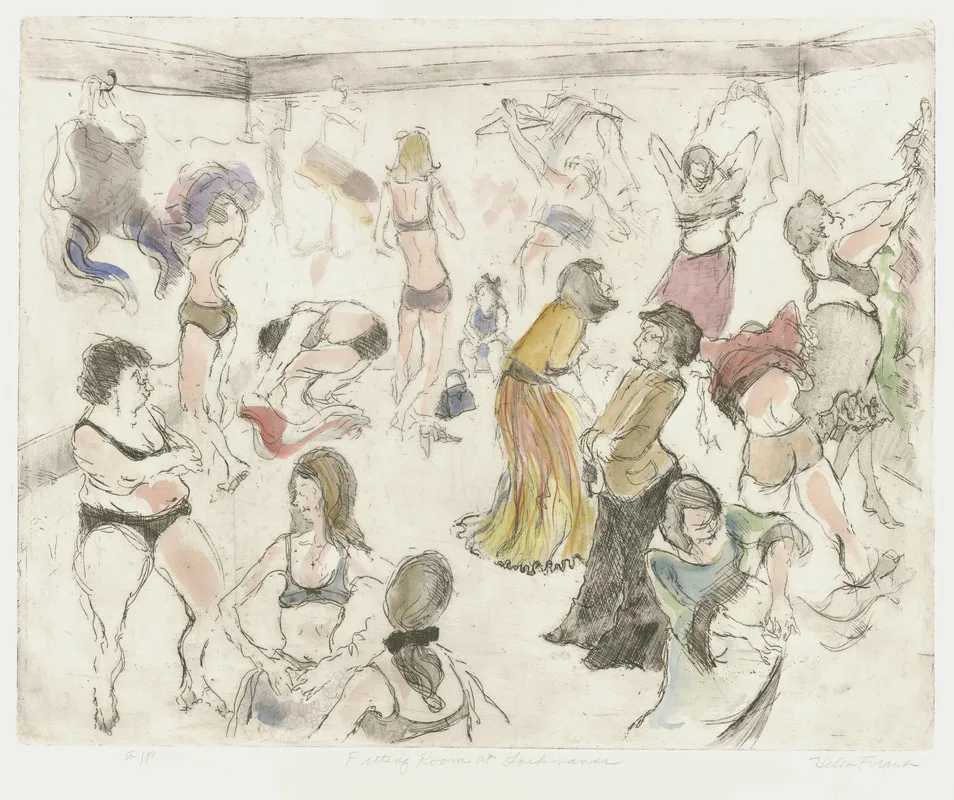
    Helen Frank, "Fitting Room at Lehmann's" used by permission of Lafayette College, see citation below*

    Image description
                                                                                           
    ​                                                                             For Carol


    Travel with me back in time. It’s 1976. A Saturday morning, early. I’m in the back seat of a Ford Country Squire Station Wagon that has a wood-paneled exterior and more steel than a fleet of Priuses. Mom is at the wheel. Riding shotgun is my older sister. At sixteen, she is the most glamorous person I know. I’m in the backseat, leaning forward so I can arrive just a split second sooner.

    We’re going to the City. Better than that, we’re going to Magnin’s.
     
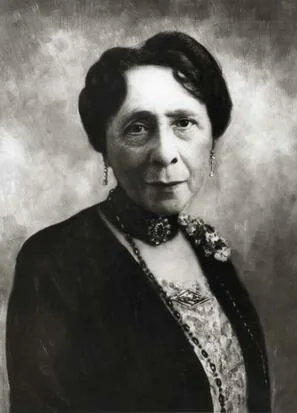
    To say that I. Magnin and Company represents old California would be an understatement. In 1876 Dutch-born Maryann Magnin, the daughter of a rabbi, immigrated to Oakland and began selling high-end baby clothes. The “I” was for Isaac, her husband. As the business expanded, the locations improved. The building we’re headed to is on Union Square. Ten stories of white marble built in 1948, a time when the department store stood as a gleaming palace on the hill of the American psyche, a repository for postwar plenty and a conduit for the magic of modernity. It was a time when families all over the country loaded themselves into big cars like ours and sailed downtown to buy a belt, a sofa, or a set of tools. For people in the Bay Area, it was Sears. The Emporium. Capwell’s. Bullock’s.
     
    For the women of my family, the biannual sales at I. Magnin’s were a pilgrimage of the highest order, for the lowest prices. A time to claim our rightful inheritances as Queens of Frugality. Unlike today, when this season’s clothes disappear magically from store shelves, making their way to secondary retail houses like Ross, or TJ Maxx, in those days many stores cleared their own inventory, creating deep-cut annual sales like the one at Magnin’s, or places like Capwell’s Basement, with its large tables piled high in pants, bras, dresses. Tables you could stand at for hours, moving your arms through the clothing like a gold miner, elbow-deep in the river, searching for treasure. 
     
    Arriving in the City for the Magnin’s sale, we thread the long body of the Country Squire around the tight spiral ramps of the newly expanded parking garage at Sutter and Stockton, and then walk through Union Square, heads held high as we march right past Macy’s (and it’s full retail prices.) 
     
    Arriving at Magnin’s, we grasp the ornate brass door handles, still cold to the touch from the San Francisco fog, and step inside, immediately enveloped by a sense of richness. The large, two-story room glows from Lalique light fixtures hanging in a golden ceiling. Powdery floral breezes waft over towards us from the cosmetics in the Mural Room with its stained glass by French artist Max Ingrand,whose work can be seen in other obscure places, like Notre Dame. Not to be distracted, we head straight to the elevators, Mom setting a fast pace as if leading us into battle, and up we go, our stomachs doing a little flip as we ascend, anticipating the glorious things we will find.
     
    I am about to sound like an old lady, but I don’t think I own one piece of clothing today that is as well-made as the things we used to buy at Magnin’s. Wool skirts with real linings, pants and shirts that lasted for years, and years. And the prices were astonishing, so we bought plenty. Walking back to the car, our arms grow longer from carrying heavy bags, and again we walk quickly, like bank robbers, hurrying from the scene of the crime.
     
    Loehmann’s was another Mecca for us. In 1921, Frieda Loehmann put her knowledge as a department store buyer to use, acquiring the season’s designer overstock for a pittance and selling it at a bargain. The idea took off and Loehmann’s became a chain. (And a concept, later copied by many.) Mom had grown up going to Loehmann’s in New York, so when my sister and I went with her and Grandma, it was a tradition continued, a touch of old New York right there in the East Bay. One time I snapped a picture as Mom and Grandma walked in. I wanted to capture that moment, their backs slightly hunched as they lurched forward, purses clasped tightly under their arms. I felt I was witnessing a vestige of ghetto life, a time when Jews had to be savvy, to scrounge and forage to survive. There’s nothing to match the focus and intensity of mothers and daughters on a trip to Loehmann’s. When I was sixteen I read Lauren Bacall’s autobiography, and she described just such a scene with her mother at the original Loehmann’s, in a former auto showroom in Brooklyn. And that’s how I felt. When I went to Loehmann’s, I was connected to a great lineage of women in pursuit of fashion. I was a New Yorker. I was Lauren Bacall.
     
    Loehmann’s had much to recommend it, with its tantalizing, slightly illicit-sounding “Back Room” for designer fashion. But my favorite thing about Loehmann’s was the communal dressing room. Mirrors all around, no limit to the number of items you could bring in, beyond what you could manage to carry in your arms. Everybody half-naked, and free to comment on anything they liked. “You’re not getting that? I’ll try it!” someone would say, grabbing my reject from the rack in the middle of the large space. “What a figure!” the old lady next to mom might say, pointing to me, and I would blush as the other women nodded, feeling like I had a dozen kind grandmas. I’m not alone. Loehmann’s dressing room is immortalized in an etching with hand coloring by artist Helen Frank. And Erma Bombeck, a humorist I used to think was corny, but now seems increasingly wise, once titled one of her books, “All I Learned About Animal Behavior I Learned in Loehmann’s Dressing Room.”
     
    Of course, shopping wasn’t just about clothes. On most every Saturday morning my siblings and I woke to the blaring horn of the station wagon, signaling us to get out of bed and come unload the haul of goods (and not-so-goods) mom had acquired in her garage sale-ing. But sometimes Mom paid full price. When Mom and Dad had a party, we always made a trip to the Genoa delicatessen in Oakland, back when it was a postage stamp-sized shop where we would crowd in shoulder-to-shoulder and pick a number. Mom would buy sliced salami, and ravioli. 
     
    For Dad, a love of shopping was all about books. Once, during the turbulent sixties, Dad was browsing at a bookstore on Telegraph Avenue while the rest of us were waiting in the car. Mom, me, my brother, and my sister. Waiting. And waiting. It was one of those times as a kid when life gets very vivid all of a sudden. Mom was fuming. I could almost see the steam coming out of her ears. Suddenly there was a huge crash above us. Someone had thrown a gigantic pumpkin from an apartment above, and it landed square on the roof of our car. Perhaps our station wagon was a symbol of the bourgeoiserie, and they were making a statement. Perhaps they were on LSD, and thought the pumpkin was a bomb that needed to be gotten rid of. Either way it was the last straw for Mom. With three frightened children, the wet flesh of the pumpkin-goo pouring down the windows around us, she ordered my big sister to go in and get Dad, which she did, dragging him away from the books like an alcoholic from the bar.
     
    Telegraph Avenue is different these days. The flagship of revolutionary cafés, Café Mediterranean, also known as “the Med”, is recently closed. Meanwhile, the Genoa has one location left, not the original. Loehmann’s went bankrupt. I didn’t know it at the time, but even before they moved into the “White Marble Palace”, as Christian Dior called it, I. Magnin’s had been sold to the Bullock’s chain, and by the time I was shopping there the two had merged to become “Federated Department Stores.” Later the Magnin’s and Bullock’s brands were bought out by Macy’s, before disappearing entirely after a “realignment.” Until recently, though, one could still use the sixth floor restroom. Made of green marble, fit for royalty, it had become part of Macy’s. But the building recently changed hands again, so that, too, is ended.
     
    And so it goes.
     
    These days my shopping patterns are varied. I have my favorite local shops, many of which seem to close too soon, but I’ll admit to ordering frequently online, and shopping at large discount stores. I’d like to say that every time I do, I wonder what beloved local business I am helping to kill, but I don’t. That would be too exhausting. Mostly, I appreciate the time and money saved. 
     
    Still, I think about it. Where that bookstore on Telegraph stood, just a few doors down from the old Café Med, is a gleaming new café. It has tall windows and stark black tables that no one will ever carve their names into, and around which no revolutions will be planned. I drive by one evening and see the students, each illuminated in the solitary glow of their laptops. I feel the urge to stop. To go in and tell them that this once was a bookstore, and that someone smashed a pumpkin on the roof of our car. I want to tell them about Loehmann’s, and Magnin’s, and the Genoa, too. I want to ask them, and myself, and all of us, what are we doing?
     
    Fortunately, Magnin’s lives on in other ways. The company grew deep roots in California, and San Francisco in particular. Joseph, one of Maryann and Isaac’s eight children, founded his own clothing company, which was run by his son, Cyril Magnin, and Cyril’s philanthropy is legendary in the City. He helped to establish the Asian Art Museum, American Conservatory Theater, and was a staunch supporter of the opera and other artistic institutions, earning him the moniker “Mr. San Francisco” from none other than Herb Caen, the beloved columnist who would’ve been well within his rights to claim the title for himself.
     
    You can never go home again, so they say. But I miss Herb Caen. And I miss those sales at Magnin’s. The rest of the year Magnin’s belonged to socialites and wealth-mongers, the crème de la crème. But twice a year, it was ours. 
     
    It’s hard to put your finger on what’s missing from shopping these days. But I guess for me it’s the ride home. Mom is at the wheel. My sister still gets the front seat, and I’m in the back. But now I’m not leaning forward. I’m resting deeply into that giant Country Squire seat, lightheaded, and exhausted, surrounded by bags. Classy bags made of thick, stiff paper, with silk rope handles and embossed lettering that reads, “I. Magnin and Co.”

    P.S. In researching this article, I found my way to various I. Magnin images and memorabilia, one of which was the dress below, which I bought on Ebay. What a steal!

    *Helen Frank print used by permission of Lafayette College,
     Helen Frank Master Print Collection, 1949-2014. Special Collections & College Archives, David Bishop Skillman Library, Lafayette College. Special thanks to Elaine Stober, college archivist, and also to Melanie Meyers, Director of Collections at the American Jewish Historical Society for allowing the use of the picture of Mrs. Magnin.
    Picture
  • Published on

    GREG'S PLATTER

    Picture
    I don’t know about you, but I was pretty self-centered in my twenties. Adulthood was just getting started, I had things to do, places to go. At least compared with how I feel now, I didn’t have too much imagination about how others really felt.

    ​And even now, I’m guilty of taking people for granted, loving them, but not always taking time to really appreciate them. I think I’m actually better at loving dogs than I am loving people. At least, I seem to have a more accurate sense of what they need and want, and also seem to have an almost infinite supply of patience and love when it comes to my four footed friends. So when my beautiful German Shepherd passed away suddenly, three months ago, I was devastated, of course. But I knew that I had filled her life to the brim with happy dog days. She played, she frolicked, she ate treats, she got belly rubs. All the time. Every day. And that’s a comfort to me, now that she’s gone.
    Image description
    I can’t exactly say the same for the sudden loss of my cousin, Greg, this past October. Of course I loved him, of course I thought about what a great guy he was, and was always thrilled to see him and catch up. But it wasn’t until he was gone that I really began to appreciate who he was. A lot of that came from seeing him through the broader lens of the love of his family and friends. His coworkers, his Hootenanny partners, his fellow Ducks fans. In some ways, it wasn’t only that I got more information about Greg, more data, but that because of the loss, I took the time (or the time took me) to reflect more deeply. 

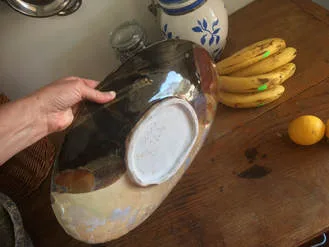
    One of the things I’ve been thinking about a lot since October, is Greg’s platter. 

    I’d say we give pretty nice Christmas gifts in our family. But except for the kids, we mostly try to keep it modest. Scarves and best sellers, a big box of juice oranges. Those are pretty much the norm. And then one Christmas, about twenty years ago, there was the platter. 
             
    Greg handed me a heavy package, and I couldn’t imagine what it was. When I opened it, I was somewhat stunned at what a special, lovely gift he had given me. I don’t remember what I said when I unwrapped it. But I do remember what Greg said. He said that he had been at a crafts fair, and when he saw it, he immediately thought of me, and how creative I was.

    “I just thought you would like it,” he said. 

    He was right. I like it.

    And I’ve liked it for twenty years. For a while I kept onions on it, then it was for my snacks hodgepodge. When I did a photo shoot for a column on veganism, I dusted it off and loaded it with pretty vegetables.
    And other times it was tucked away in a cabinet. But it’s always been there. And so has the memory of Greg’s attention, which is the greatest gift someone has to give, and one Greg gave of generously. On the annual Thanksgiving walk one year, I told him the whole convoluted plot of my first, deeply flawed novel. “Sounds cool!” he said with that smile of his. “I can’t wait to read it.” 

    The loss left by Greg’s parting is commensurate with the magnitude of his spirit. Which is to say, it’s huge. And there’s no right way to deal with loss. I know I’ve reveled in the many pictures of him, and I’m glad his parents are organizing a project for more pictures, and more memories to flow. 

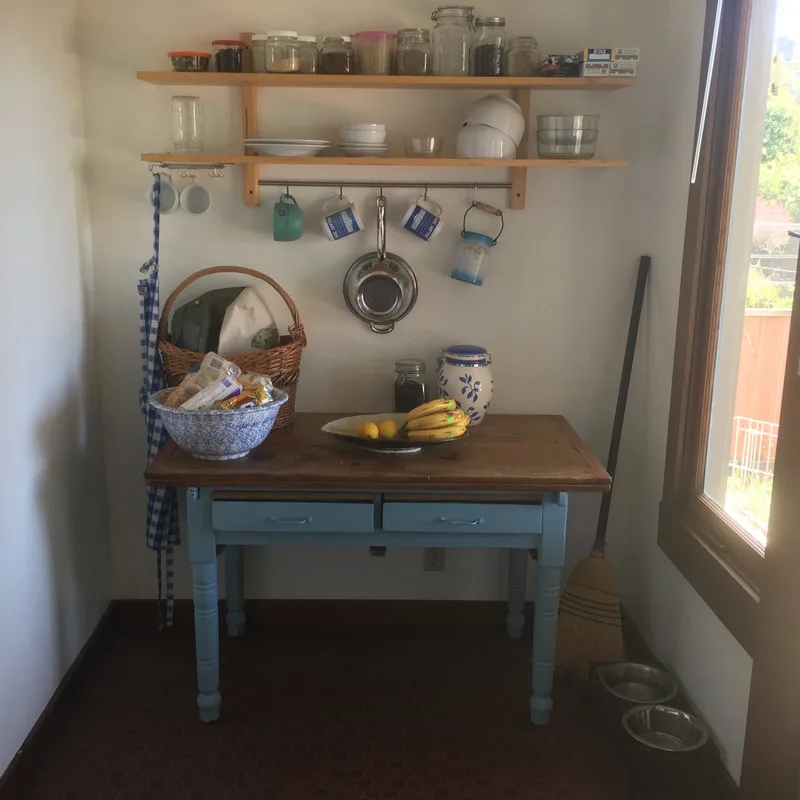
    I just moved from a rather large upstairs unit of my house, into the quite small in-law apartment, so I did a considerable amount of downsizing. In imagining the new space, I knew I wanted a big picture of my German shepherd. I even paid to have it matted and framed. I love how she is here with me, standing guard, watching over me while I do the dishes.

    ​Pictures help. Memories help.

    The hardest thing about moving is sorting through stuff, and figuring out what is important, and what isn't. Asking, “What really matters?” Greg’s passing has inspired that reflection as well, in spades. 

    But back to the Christmas memory. Just imagine, really imagine, the mind of busy guy in his early twenties, springing for a quality gift like that for his cousin. How great a guy is that? 

    Greg’s entire life was made up of thousands of instances of generosity like that. He was the embodiment of the idea that it only takes a moment to really consider other people, and only another moment to show that appreciation.

    A lifetime of such moments strung together, becomes a lifetime of love.

    I got rid of a lot of books, clothes, cluttery things I never really needed, or was hanging on to for the wrong reasons. They say when space is limited in the kitchen, try to have things that do more than one thing. No ice crushers or melon ballers. But rest assured, Greg’s platter made the cut, and stands in a place of pride in my new, downstairs home. I think I’ll put avocados on it, or bananas. But maybe I will use it for other things, too. For marbles, or pinecones. Who knows? After all, I’m a very creative person.

    ​I know that, because Greg Walsh told me so. 
    Picture